

Listen to baby stars: NASA's Chandra turns star nurseries in Orion and beyond into music
Four new sonifications from Chandra, Webb and Hubble data let you hear stars being born, from the starburst galaxy M82 to the Orion Nebula and Rho Ophiuchi.
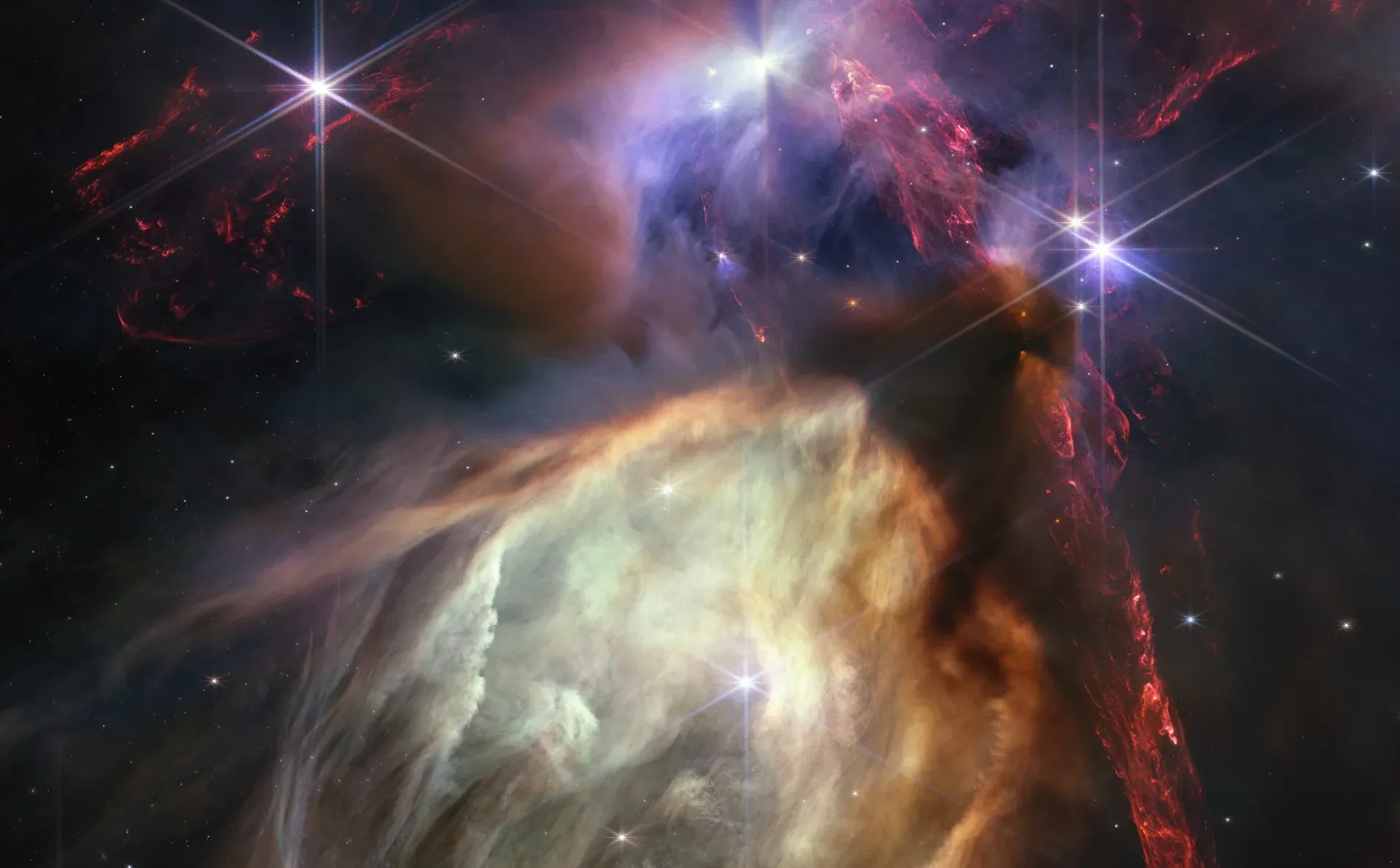
NASA's Chandra X-ray Observatory has released a new "album" that turns pictures of baby stars into sound, letting anyone hear places across our galaxy and beyond where stars are being born right now.
The four new sonifications use data from Chandra and other NASA telescopes, including the James Webb, Hubble and retired Spitzer space telescopes. Studying places where stars are forming, and where young stars are present, helps astronomers understand the life cycle of all stars, including our own Sun, NASA said.
A starburst galaxy
The first track is the galaxy Messier 82, called a starburst galaxy because stars are forming there tens or even hundreds of times faster than in the Milky Way, possibly because of a past collision with another galaxy. Chandra sees giant plumes of hot gas thrown out by young, giant stars that quickly explode.
Its sonification begins with a radar-like scan that grows louder where sources are brighter. The X-rays are mapped to the highest frequencies, infrared light becomes a low drone and plucked sounds, and visible light turns into a range of musical pitches and textures.
Orion, Carina and Rho Ophiuchi
The Orion Nebula, visible just below the belt of Orion with a small telescope and dark skies, is one of the closest and busiest star-forming regions to Earth. Chandra sees more than a thousand very energetic young stars there, which twinkle in the sonification, while Webb's view of the dust and gas they are built from is heard as lower musical tones, distorted strings and a digital harp.
Part of the Carina Nebula is nicknamed the "Cosmic Cliffs" for the spectacular structure Webb revealed in infrared. Chandra sees through the dust to pick out individual baby stars, which become short string sounds, while a diffuse X-ray glow is given longer string notes.
Rho Ophiuchi, pictured, is a star-forming cloud full of gas and stars of different sizes and ages, where Chandra reveals infant stars that violently flare and give off X-rays. Those X-rays become high-pitched glassy tones and stars are played as metallic plucks. There is a gap in the middle of the piece, where dark dust clouds give off very little light.
Science you can listen to
The sonification programme is led by the Chandra X-ray Center, with visualisation scientist Kimberly Arcand, astrophysicist Matt Russo and musician Andrew Santaguida of SYSTEM Sounds, and consultant Christine Malec. Turning data into sound opens up astronomy to people who are blind or partially sighted, as well as anyone who wants to experience the universe in a new way.
The tracks, and many more, can be heard free at chandra.si.edu/sound. If skies clear this week, Orion is rising in the east in the late evening, so you can listen to the nebula's baby stars and then look up at where they are.
More in Science
All


Latest news
Featured posts
-
Things to do
Top 10 places to visit in Birmingham
-
Food and drink
The 12 most popular food spots in Birmingham
-
Things to do
The best laser tag locations in Birmingham