

Jonathan the 194-year-old tortoise reveals the genes that may explain his extraordinary long life
Scientists found 287 genetic variants linked to DNA repair and cancer protection in the world's oldest land animal, and gene controls that have barely aged.
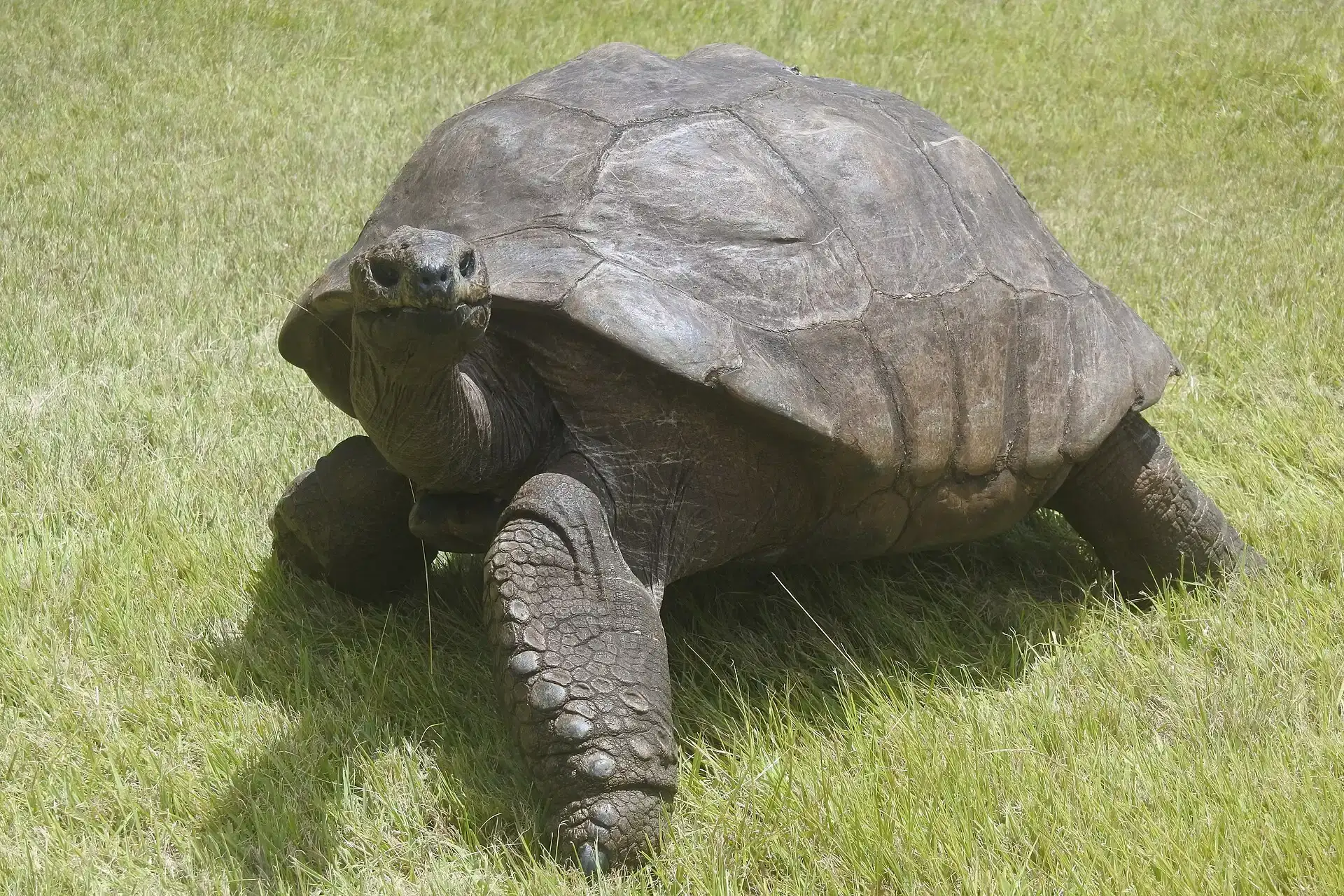
Jonathan, the giant tortoise who at an estimated 194 years old is the oldest known land animal alive today, may have revealed some of the secrets of his long life to scientists studying his DNA.
In a study published in Science Advances, researchers identified 287 distinctive genetic variants linked to protection against the effects of ageing. They influence some of the body's most important jobs: repairing damaged DNA, limiting inflammation, controlling insulin and suppressing cancer.
Born before Queen Victoria came to the throne
Jonathan is an Aldabra giant tortoise believed to have hatched in 1832, which means he was alive during the lifetimes of Charles Darwin and Queen Victoria. He arrived on St Helena, the British Overseas Territory in the South Atlantic, from the Seychelles 144 years ago as a gift to the island's governor, and was already fully grown when he got there. He still lives in the grounds of Plantation House, the governor's official residence.
Genes that have stayed young
One of the most surprising findings came from Jonathan's epigenome, the system of chemical markers that switches genes on and off. These controls usually change as animals get older, which can disrupt how cells work and contribute to the decline that comes with age.
The researchers compared Jonathan's epigenome with those of younger tortoises of the same species. They found that the controls linked to DNA repair and metabolism had stayed remarkably stable, closely resembling those of his much younger relatives. It is the first time the epigenome of a giant tortoise has been studied.
"We found that the gene regulators involved in energy production and DNA repair have remained incredibly stable in Jonathan over almost two centuries," said Dr Justin Gerlach of Peterhouse at the University of Cambridge, who was involved in the study.
"Working with a really old giant tortoise is such a privilege: you get a sense of the tortoise being your collaborator, not your study subject," he added.
Lessons for human health
The project was led by Kallel, a US non-profit organisation that researches longevity. Its scientists hope that understanding animals able to live for centuries could help develop new ways to slow age-related decline and prevent chronic diseases in people.
"Nature has already solved the puzzle of aging in remarkable ways, and Jonathan's genome provides a blueprint for cellular resilience," said Dr Stephen Clark, Kallel's founder and the study's senior author.
The researchers are careful to say that turning these clues into treatments for people will take much more research. But they believe that studying animals which stay healthy for so long could point the way to protective mechanisms that future medicine might borrow.
Dr Gerlach, who has spent decades studying giant tortoise ecology and conservation, said: "There are few creatures that could tell us more about aging than the giant tortoises of the Galapagos and Seychelles islands."
More in Science
All

Latest news
Featured posts
-
Things to do
Top 10 places to visit in Birmingham
-
Food and drink
The 12 most popular food spots in Birmingham
-
Things to do
The best laser tag locations in Birmingham