

AI-assisted proof of the Riemann hypothesis claimed, leaving mathematicians amazed but cautious
An Anthropic mathematician says AI helped prove the 1859 problem about prime numbers. Experts call it potentially historic, but the 17-million-line proof is still to be checked.
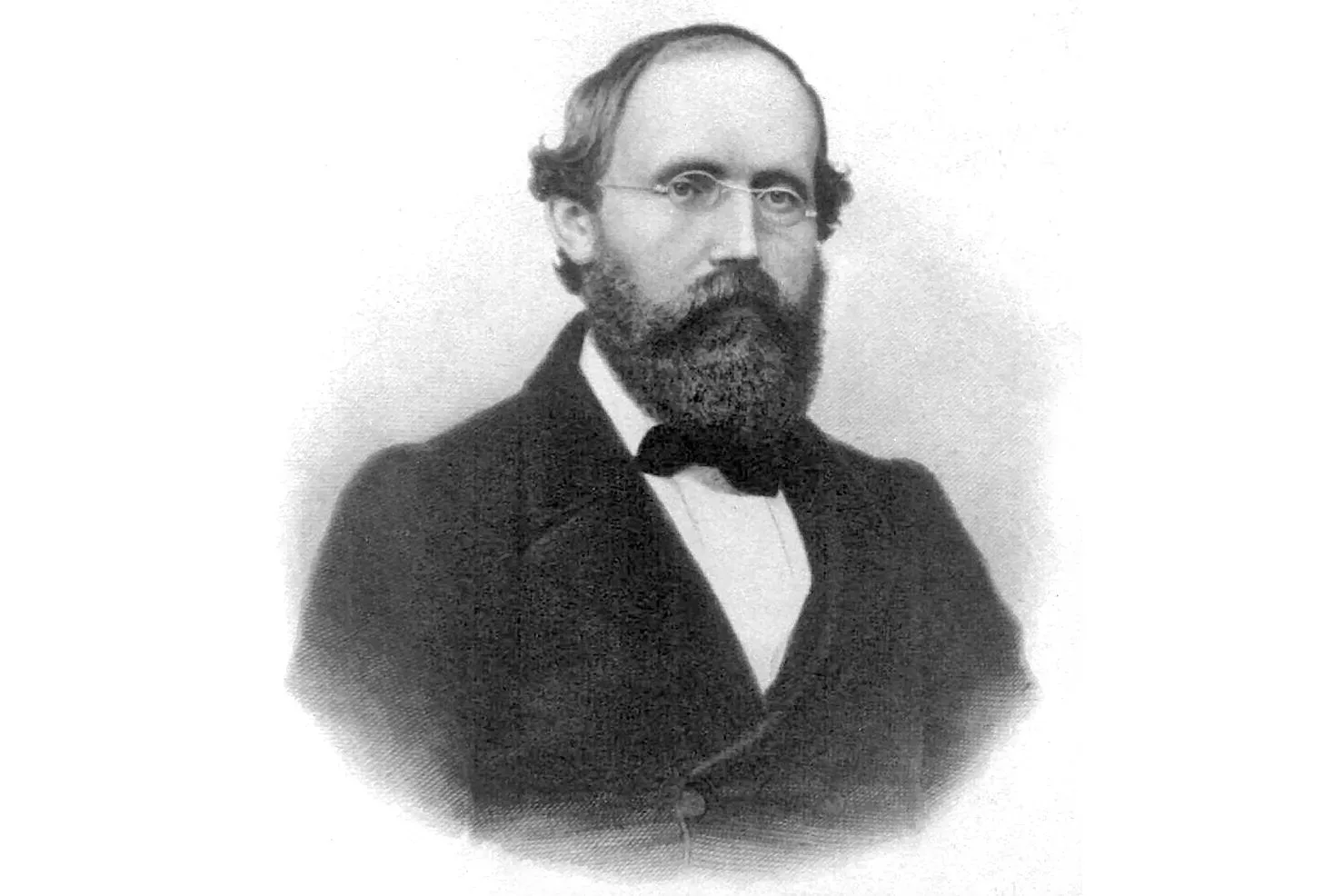
A mathematician at the AI company Anthropic says he has used artificial intelligence to prove the Riemann hypothesis, one of the most famous unsolved problems in mathematics, in a claim that experts say could be the biggest mathematical result of the century, if it holds up.
Levent Alpöge announced the AI-assisted proof this week, New Scientist reported. It has not yet been checked by other mathematicians, and leading figures in the field have greeted the news with a mixture of exhilaration, bewilderment and caution.
The atoms of numbers
The hypothesis, put forward by the German mathematician Bernhard Riemann in 1859, concerns how prime numbers are distributed. Primes, which cannot be divided into smaller whole numbers, are like the atoms of arithmetic, but predicting where the next one will appear is notoriously hard. Riemann proposed a formula that would make that far easier, but died without proving it, and mathematicians have been trying ever since. It is one of the Clay Mathematics Institute's Millennium Prize Problems.
"It has captured the imagination, presumably because it is about something that we can all understand - the prime numbers - and because it has resisted the efforts of so many for so long," said Chris Daw of the University of Reading. "And it is important to mathematicians because it is so useful for other problems."
"Like having found the Holy Grail"
Thomas Bloom of the University of Manchester said: "If true, it would, in my opinion be the greatest achievement yet by AI, and one of the greatest proofs in the history of mathematics."
Rainer Dietmann of Royal Holloway, University of London, said: "If it turns out to be correct, this is not only huge, it's the biggest result in pure mathematics ever… It's like having found the Holy Grail."
17 million lines to check
The scale of the work is part of the challenge. Mr Alpöge has said the full proof runs to more than 250,000 pages. He has instead released a version prepared for the proof-checking software Lean, which is 17 million lines long.
"In proportion to the magnitude of this claim, we should be appropriately sceptical," said Dr Bloom, who wants to see both the Lean code checked independently and human experts weigh up the big picture. Scott Aaronson of the University of Texas at Austin said mathematicians would be satisfied "when, and only when, they're able to understand the proof themselves".
A new era for mathematics
The claim comes after a year in which AI tools have cracked one famous problem after another, leaving some mathematicians uneasy about the future of their field. Others are upbeat.
"This is a very exciting time for pure mathematicians, and we are needed more than ever," said Alex Bartel of the University of Glasgow. "AI is capable of spitting out proofs at a much faster pace than we are used to, but our task remains that of properly understanding what is going on."
Separately, a mathematician, Alessandro Masullo, has put forward a 940-page proof of a generalised version of the hypothesis without using AI. That too awaits checking.
More in Science
All

Latest news
Featured posts
-
Things to do
Top 10 places to visit in Birmingham
-
Food and drink
The 12 most popular food spots in Birmingham
-
Things to do
The best laser tag locations in Birmingham