

Antiviral drip shows early promise for long Covid in trial involving Aston University
Most of the 73 patients reported less fatigue and walked further after five days of treatment. Researchers now want a full trial to prove whether it works.
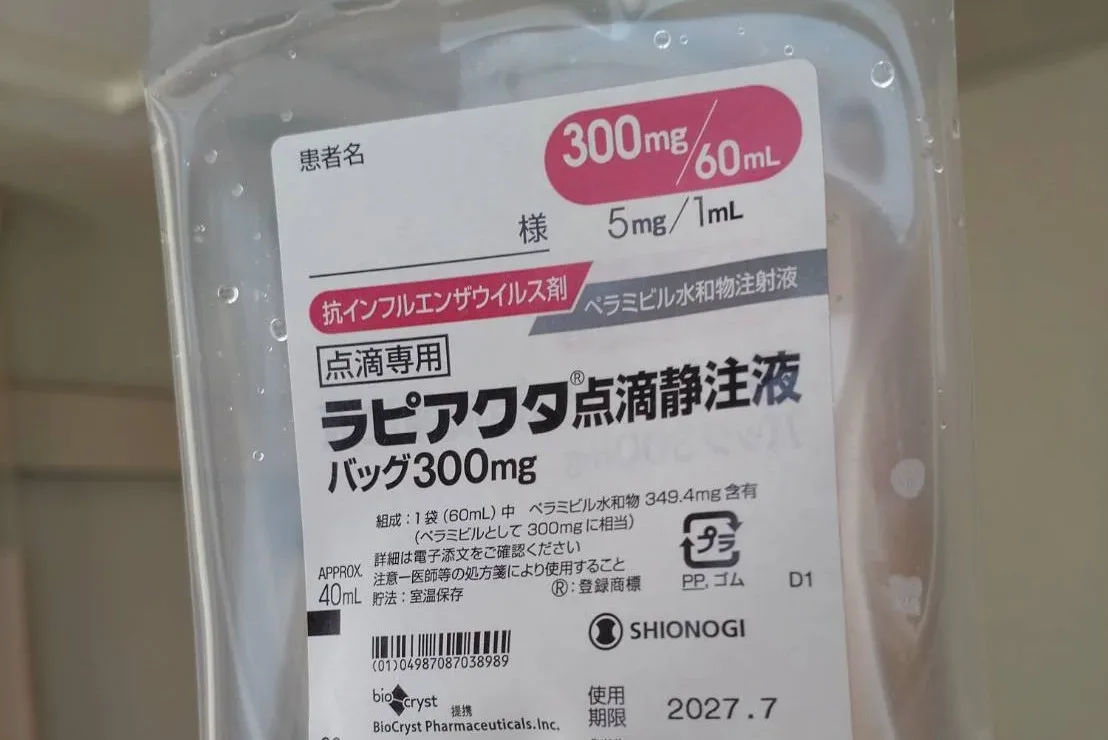
A trial involving researchers from Aston University in Birmingham has found early signs that an antiviral drug given through a drip could help people living with long Covid, raising hopes for a condition that has had few treatment options.
The £1.2m ERASE trial, led by the University of Derby, is the first in the world to test whether antiviral medicines given intravenously could be a treatment for long Covid. Professor Ian Maidment of Aston Pharmacy School led the pharmacy side of the research, including making sure the medicine reached each trial site.
What the trial found
The 73 people who took part had a series of assessments before receiving the antiviral drug remdesivir through a drip on five days in a row, given by clinical teams in Derby and Devon.
The study was mainly designed to show whether the treatment, and the assessments needed to judge it, could be delivered safely, and it found that they could. But the researchers also saw encouraging changes: most participants reported less fatigue, a better quality of life and an increase in how far they could walk in a timed walking test.
"An important step forward"
Professor Mark Faghy, who led the study, said: "These findings are an important step forward in our research into potential treatments for long COVID. We have shown that it is possible to deliver this intravenous antiviral treatment and undertake the assessments needed to evaluate it in people with long COVID."
"We also saw encouraging changes in measures including fatigue, functional capacity, quality of life and commonly reported symptoms."
The caveat
The researchers are clear that this was not a test of whether the drug works. There was no comparison group, so the improvements cannot yet be put down to the treatment itself.
"While ERASE was not designed to tell us whether the treatment caused those changes or whether the treatment works, the findings give us a strong rationale for carrying out a larger randomised controlled trial that will allow us to answer that question," Professor Faghy said.
The team is now calling for that larger trial to be carried out.
Millions affected
More than two million people in the UK, and more than 144 million worldwide, are estimated to be living with long Covid. Symptoms vary widely and can include extreme fatigue, breathlessness, palpitations and brain fog.
The trial began in September 2024 as part of a wider programme of research at the University of Derby into the causes and impact of long Covid, and was managed by the University of Plymouth's Peninsula Clinical Trials Unit. The results were published by Oxford University Press on 16 September.
More in Science
All

Latest news
Featured posts
-
Things to do
Top 10 places to visit in Birmingham
-
Food and drink
The 12 most popular food spots in Birmingham
-
Things to do
The best laser tag locations in Birmingham