

BepiColombo reaches Mercury after an eight-year voyage, set to become only the second craft to orbit it
The European and Japanese mission enters orbit on Saturday, then splits into two orbiters to study Mercury's huge core, magnetic field and hidden ice.
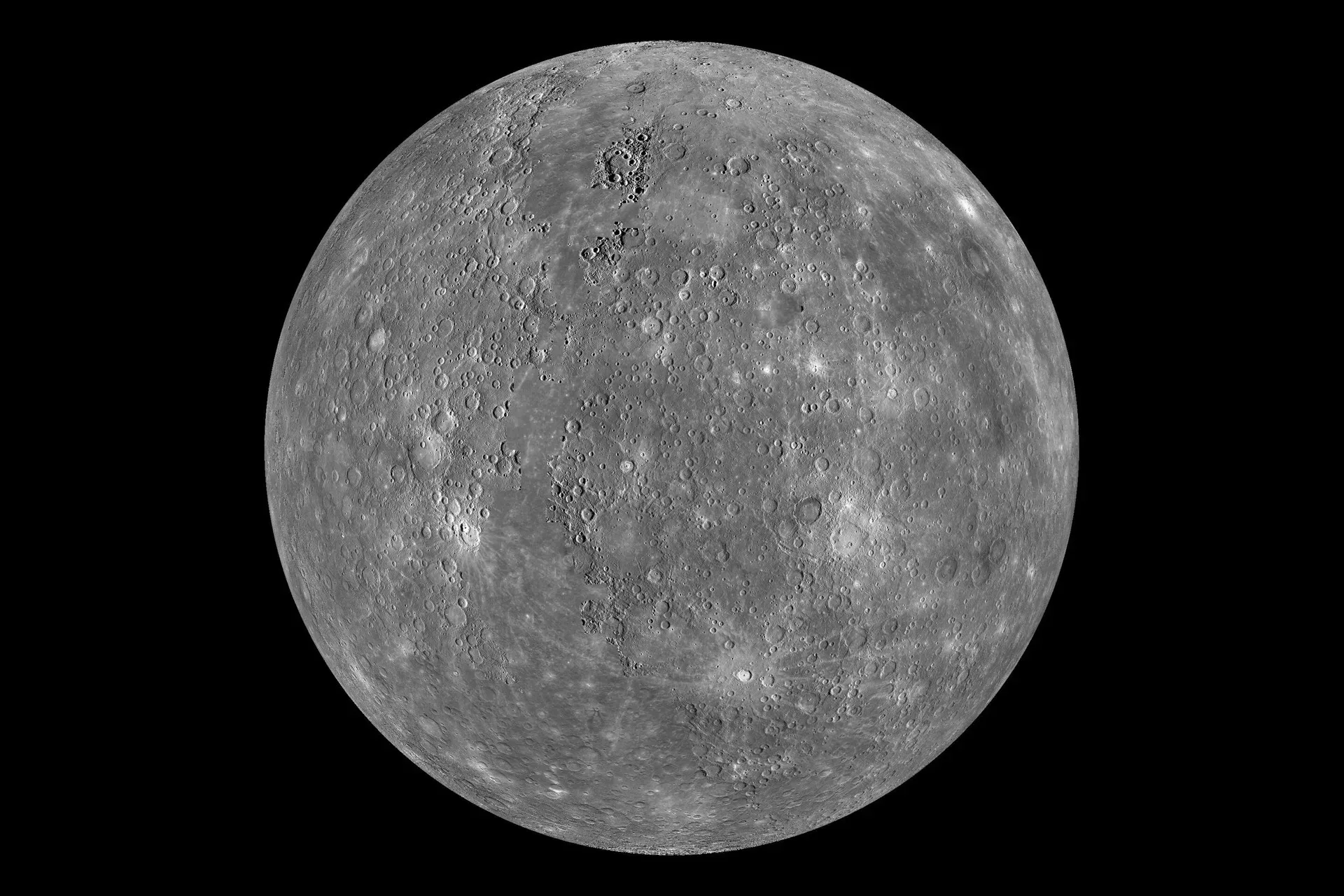
After more than eight years and 6bn miles, the joint European and Japanese BepiColombo mission has arrived at Mercury, and flight controllers are due to fire its thrusters tomorrow to send it into orbit, making it only the second spacecraft ever to circle the smallest planet in the solar system.
For researchers, the €1.6bn (£1.4bn) mission is the best hope yet of understanding how Mercury formed so close to the Sun, why it has a magnetic field, and what makes up the ice hiding in its permanently shadowed craters, the Guardian reported.
"It's been a long wait"
"We're very excited, it's been a long wait," said Professor Emma Bunce of the University of Leicester, who has worked on the project for 20 years. She is the principal investigator on the Mercury Imaging X-ray Spectrometer, or MIXS, which will analyse the chemical make-up of the planet's surface.
Getting there is unusually difficult. Because Mercury is near the centre of the solar system, spacecraft heading for it accelerate under the Sun's gravity and have to spend much of the journey braking to avoid shooting straight past. "It's a very complex and challenging mission," Professor Bunce said.
Two orbiters, one planet
In early December, the spacecraft will separate into two orbiters, one European and one Japanese, which will move into different polar orbits. Science operations are due to start in April.
The European Mercury Planetary Orbiter will map the surface and its make-up in high resolution and study the planet's unusually large core. Its Japanese partner will measure Mercury's magnetic field and its sodium exosphere, the extremely thin layer of gas that surrounds it. Mercury is only 50% larger than the Moon but has four times its mass, and one question the mission will tackle is why it is so dense.
Professor Geraint Jones, the European Space Agency's lead project scientist on BepiColombo, said: "We're expecting to learn a huge amount, bringing more powerful instruments on two spacecraft to study all aspects of the planet - its interior, surface, and the space around it."
"As well as cameras covering a wide range of wavelengths to study the surface, we'll be 'tasting' the gases around the planet, sensing the magnetic field, probing the interior with ultrasensitive instruments, and mapping the shape of the whole planet with a laser."
A planet of extremes
Mercury takes 58 Earth days to turn once on its axis, so a spot on its surface can have three months of daylight followed by three months of night. It is only 36m miles from the Sun, a little over a third of Earth's distance, and surface temperatures swing from 450C by day to minus 180C at night.
The orbiters are expected to work for about three years before running out of fuel and crashing into the surface. "Sadly, they are not coming back," said Professor Bunce.
More in Science
All

Latest news
Featured posts
-
Things to do
Top 10 places to visit in Birmingham
-
Food and drink
The 12 most popular food spots in Birmingham
-
Things to do
The best laser tag locations in Birmingham