

Short-tailed monkey spotted in the mountains of Laos could be a species new to science
Researchers have proposed the short-tailed langur from photographs. Other experts want DNA proof, and the next expedition will look for it.
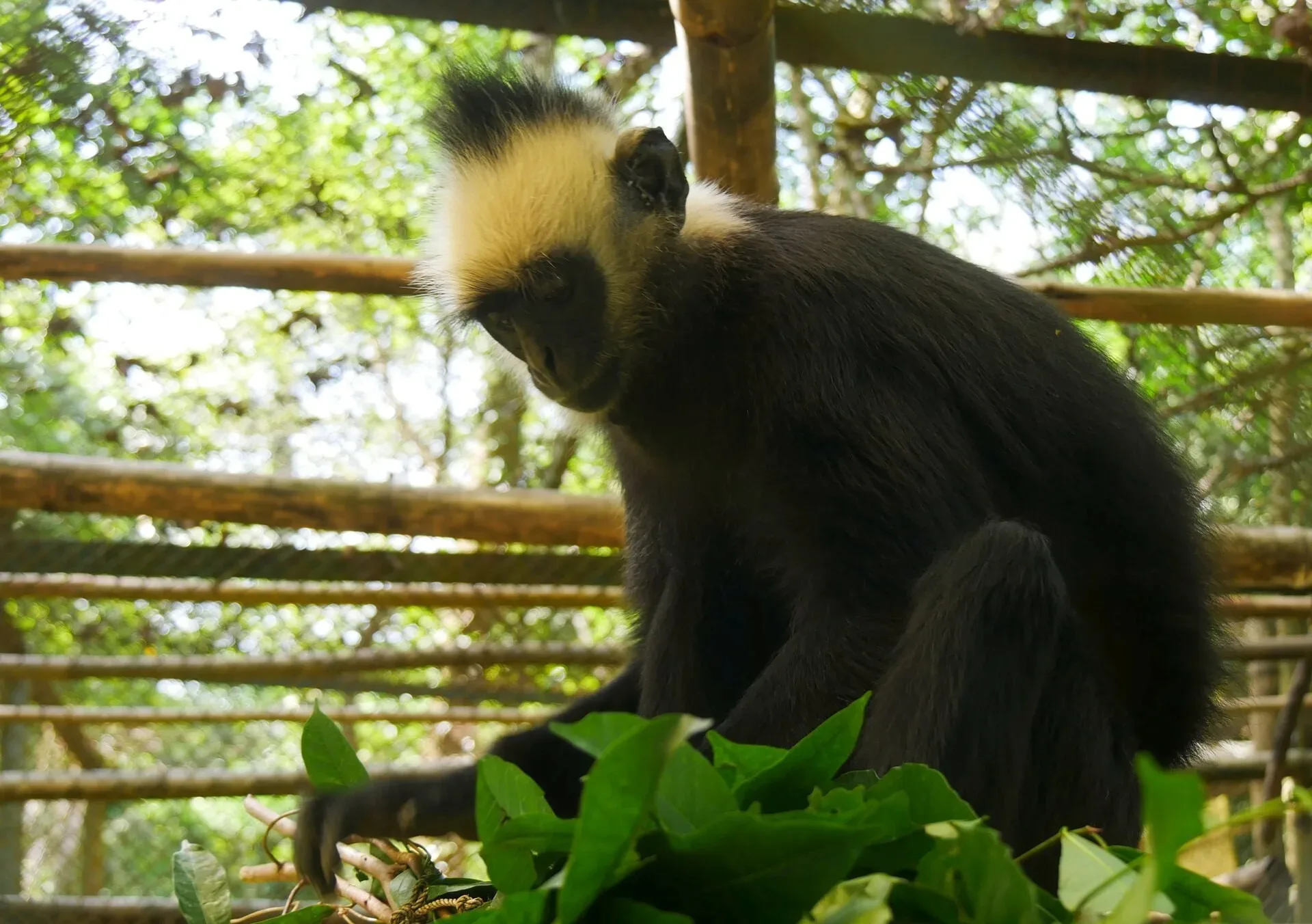
A monkey with an unusually short tail, photographed in the remote limestone mountains of Laos, could be a species new to science, according to researchers who have formally proposed it as the short-tailed langur.
The proposed species, Trachypithecus brevicaudus, was described in the Vietnamese Journal of Primatology and lives in the Annamite Mountains, a biodiversity hotspot home to dozens of species found nowhere else. Its scientific name means "short tail".
A photo that caught the eye
"A photograph of a langur, published by the Saola Foundation, caught my attention because the animal's tail is noticeably shorter than that of any other species within this group of limestone langurs," said Tilo Nadler, lead author of the paper and a wildlife consultant for the Vietnamese government and conservation groups.
The photo was taken in 2024 by Rob Timmins of the Saola Foundation, which is searching the mountains for the saola, a rare animal often called the Asian unicorn. Mr Nadler and his colleagues then travelled to the remote limestone peaks of Bolikhamxai province in central Laos and took their own pictures.
"The first time I observed a group of these langurs, it was immediately clear to me that they were different from all the other limestone langurs I had previously encountered and knew well," he said. "It was a very exciting experience."
Not everyone is convinced yet
There is no body and, so far, no genetic evidence. Mr Nadler points out that other primates, including the highland mangabey in Tanzania and the Arunachal macaque in the Himalayas, were first described from photographs, with DNA confirmation coming later.
But primate expert Vincent Nijman, who was not involved, says the evidence is not yet strong enough. "It could well be a new species, but I think the data that have been presented do not give sufficient support for this," he said, noting that tail lengths overlap with those of the related Hatinh langur.
The researchers now plan to collect the monkeys' droppings for genetic analysis and to search local villages for remains.
Good news for a hunted animal
The langurs were once heavily hunted, often by people tending hidden opium poppy fields. "However, poppy cultivation has ceased due to legislation and strict enforcement, and with it, the hunting has also come to an end," Mr Nadler said.
Only two populations are currently known, but he believes more may live on other "extremely inaccessible" limestone massifs. Next year, the Saola Foundation plans to launch a programme with the proposed new species as its flagship, to protect the karst landscape it calls home.
"A new primate is significant news, and we'd love to see this species get the wide attention it deserves," said Lorraine Scotson, the foundation's chief executive.
More in World
All

Latest news
Featured posts
-
Things to do
Top 10 places to visit in Birmingham
-
Food and drink
The 12 most popular food spots in Birmingham
-
Things to do
The best laser tag locations in Birmingham