

Quechua community in Peru tracks Andean bears with camera traps on its own reserve
Led by local conservationist Maribel Pacco, the Pillco Grande community has identified 10 bears on the Pumataki reserve beside Manu National Park.
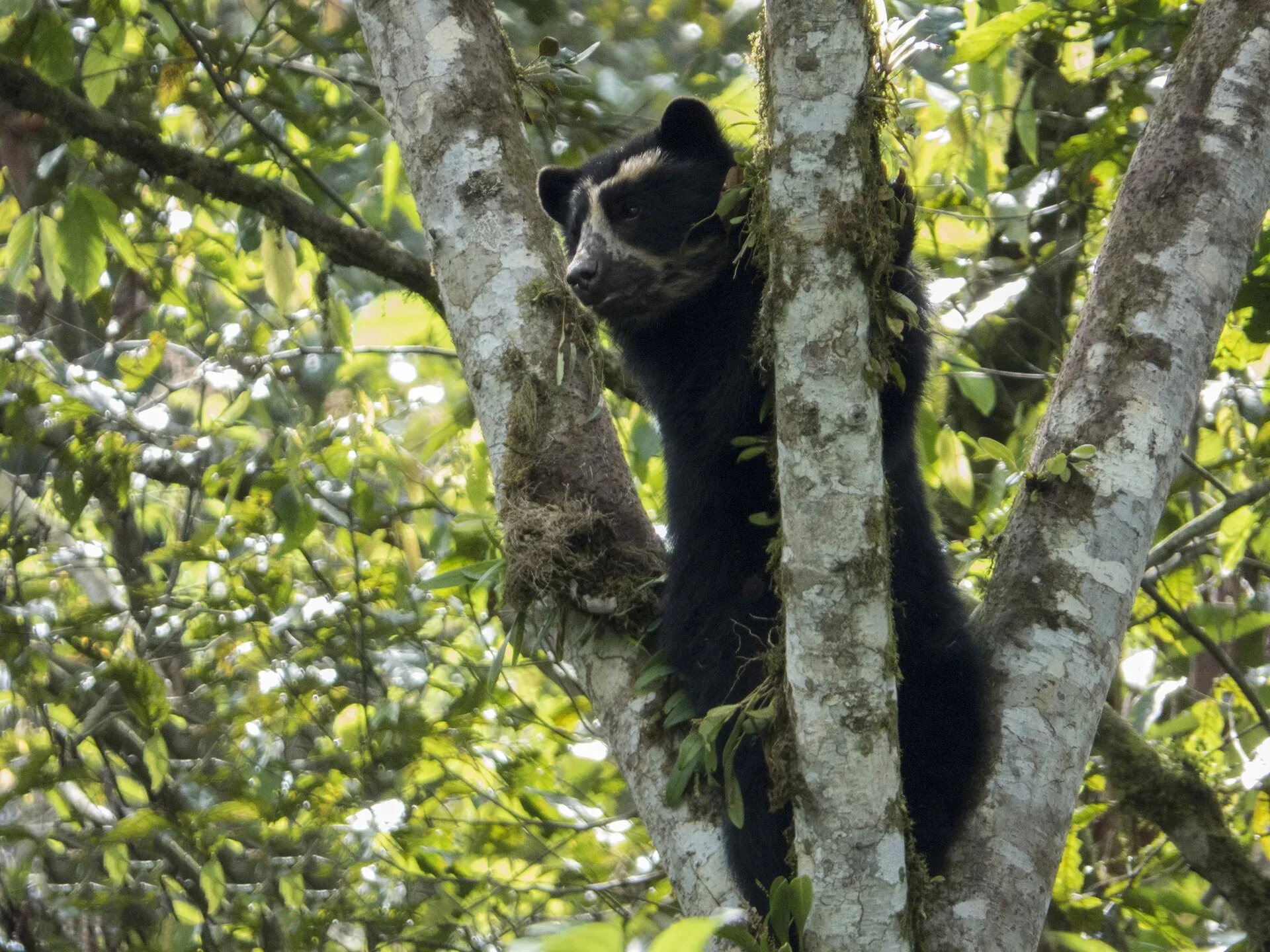
An Indigenous Quechua community in the Peruvian Andes is using camera traps to count and track Andean bears on its own forest reserve, and has so far identified 10 individual bears, each recognised by the unique markings on its face.
The project on the Pumataki reserve, a community-owned cloud forest on the edge of Manu National Park in south-eastern Peru, has produced some of the first local records of the species there, Mongabay reported.
"I decided to become a conservationist"
It was started by Maribel Pacco, who grew up in the Pillco Grande community that owns and manages the reserve. As a child she heard stories about the Apu, the sacred mountain spirit, and her father took her to the reserve, where he worked as a volunteer guard.
While volunteering as a ranger in Manu National Park during college, she encountered an Andean bear. "I fell in love with bears, their behavior, everything about them, and the role they play in the forest ecosystem," she said. "I'm not a biologist, but at that moment, I decided to become a conservationist."
In 2023 she won a grant from the Peruvian Society for Environmental Law to launch a community-led project to monitor bears in Pumataki and run environmental education.
Bears in the classroom
The camera-trap findings feed into a Quechua-language environmental education programme for young people and are shared at community meetings to show off the area's wildlife. Community members take turns, in groups of five, to visit the reserve and maintain the cameras.
The team is also studying the behaviour of other species to build a biodiversity inventory, and hopes universities will use its records of bear numbers and territories in future research. There is a catch: limited funding has forced the project to scale back some of its plans.
Rebecca Zug, a biology professor at the Universidad San Francisco de Quito who is not involved in the project, said: "There is also so much more power in Indigenous communities building conservation from within and learning about their own biodiversity from someone like Maribel than in having an outside voice come in."
A vulnerable species
The Andean bear, also known as the spectacled bear, is South America's only bear and ranges from Venezuela and Colombia to northern Argentina. It is listed as vulnerable on the IUCN Red List, threatened by habitat loss and fragmentation, poaching, killings over crop raiding and climate change.
Peru is one of its strongholds, with an estimated 5,000 bears living in its cloud forests, dry forests and high grasslands. "Peru has some of the biggest blocks of habitat left for the species across its range, but this is a forest-dependent species, so habitat loss and habitat fragmentation are major threats," said Russ Van Horn of the San Diego Zoo Wildlife Alliance.
British readers may know the species best as the inspiration for Paddington, the bear from "darkest Peru". In Pumataki, thanks to a community that has chosen to protect its own forest, the real thing has a better chance of thriving.
More in World
All

Latest news
Featured posts
-
Things to do
Top 10 places to visit in Birmingham
-
Food and drink
The 12 most popular food spots in Birmingham
-
Things to do
The best laser tag locations in Birmingham