

Roman jewellery workshop nearly 2,000 years old found under a new housing estate
Brooches, moulds and coins found at Mancot in Flintshire suggest a busy workshop that supplied Roman Chester and traded with Europe.
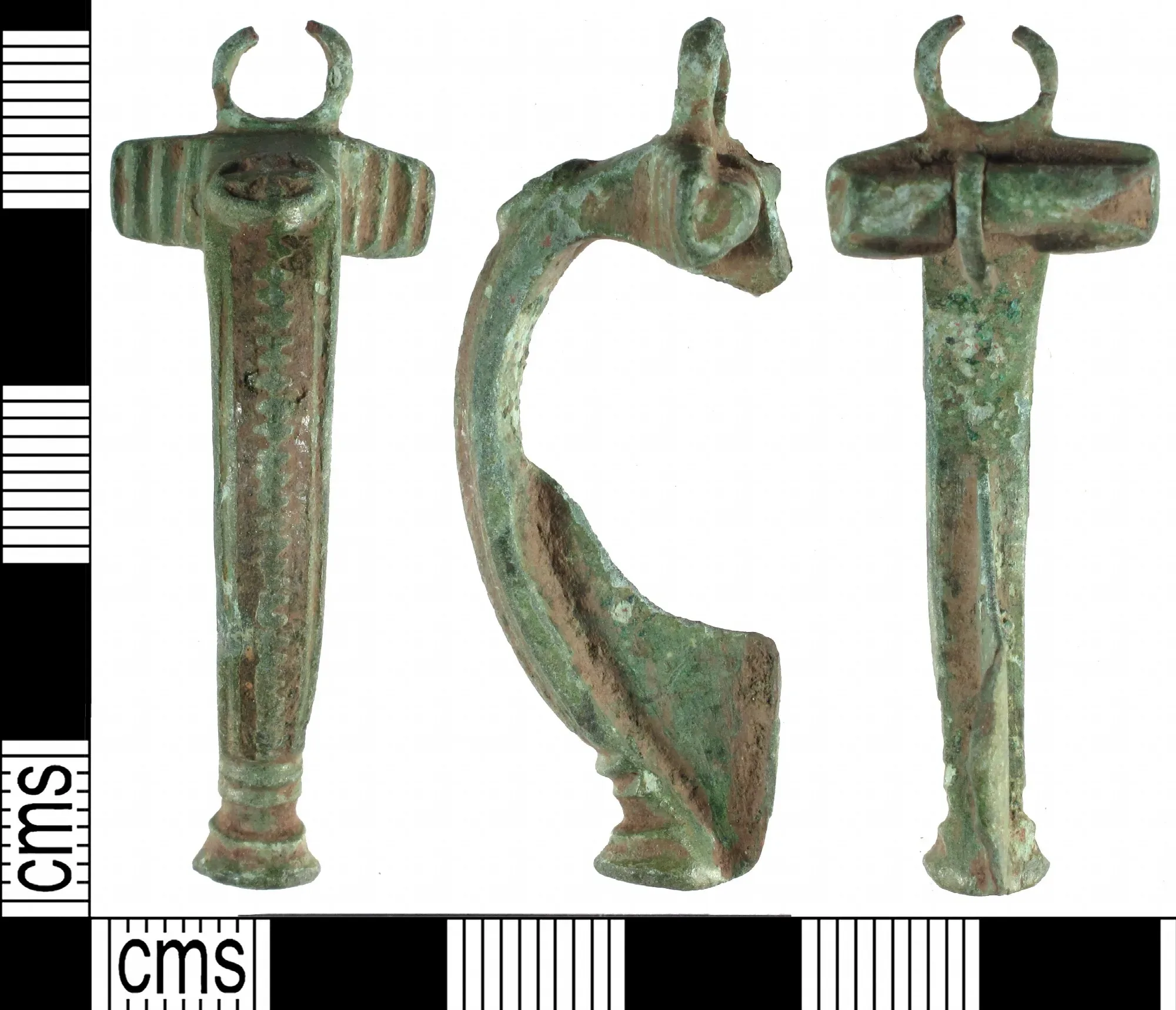
A "very significant" Roman settlement, complete with a jewellery workshop nearly 2,000 years old, has been found beneath a new housing estate in north-east Wales. Archaeologists from Heneb, the trust for Welsh archaeology, made the "unexpected" discovery at Mancot in Flintshire during mining surveys carried out for the development, and say it is one of the biggest collections of Roman artefacts ever found in the county, the BBC reports.
Brooches, moulds and coins
Before the new homes were built on Gladstone Way, archaeologists recovered dozens of items, including pottery, coins and jewellery. Among the finds are decorative brooches, one of which still has its green enamel, and lead moulds used to make them.
The moulds show that the workshop produced a "wide range" of brooches. These were practical items used to fasten clothing, but they were also brightly coloured and decorative, and often showed animals. It is thought the workshop supplied Roman society in nearby Chester, and pottery fragments found on the site suggest trade reached as far as mainland Europe.
Two coins help to show how long the site was in use: one from the reign of the emperor Commodus, who ruled from AD 177 to 192, and another depicting Constantine, who reigned about 200 years later. The settlement may even have begun in the Iron Age, before the Romans arrived.
Rewriting local history
Chris Matthews, the project manager, said the find was "very exciting" and changed what was understood about the area's past. Although Mancot overlooks the important Roman city of Chester, very little Roman archaeology had been found in north-east Wales until recently.
That had led historians to debate whether it reflected a "poor relationship" between the Romans and the people who lived there. Finds like this one, and others at Greenfield and Rossett in Wrexham, are now making them realise that this "probably wasn't the case".
Evidence from the workshop shows there was "industry" making use of the area's rich metal resources and producing "important commodities for Roman society", he said.
What happens next
The brooches and moulds have been conserved and will now be studied at the National Museum of Wales in Cardiff, where experts will try to learn how they were made, what metals were used and where those metals came from. The hope is that they will then return to Flintshire Museums Service to go on public display, with a long-term plan to bring all of north-east Wales's Roman discoveries together.
The excavation also mapped the settlement and showed that it extends underneath the village of Mancot itself, which sits between Hawarden and Queensferry.
"It's a very good time to be an archaeologist in the north," Mr Matthews said. "It's very exciting." He described the find as "the very beginning of what could be a very long period of discoveries in the area".
Archaeology and new homes
The discovery is a reminder of why surveys are carried out before building begins. Across Britain, including in and around Birmingham, development sites regularly turn up traces of the past, and recording them before construction allows new homes to go ahead while the history beneath them is saved.
More in Science
All
Latest news
Featured posts
-
Things to do
Top 10 places to visit in Birmingham
-
Food and drink
The 12 most popular food spots in Birmingham
-
Things to do
The best laser tag locations in Birmingham