

Chandra telescope solves 15-year mystery of a giant star that keeps erupting but never dies
A hidden black hole or neutron star strips gas from the 'supernova impostor' every 113 days, astronomers found, in two firsts for X-ray astronomy.
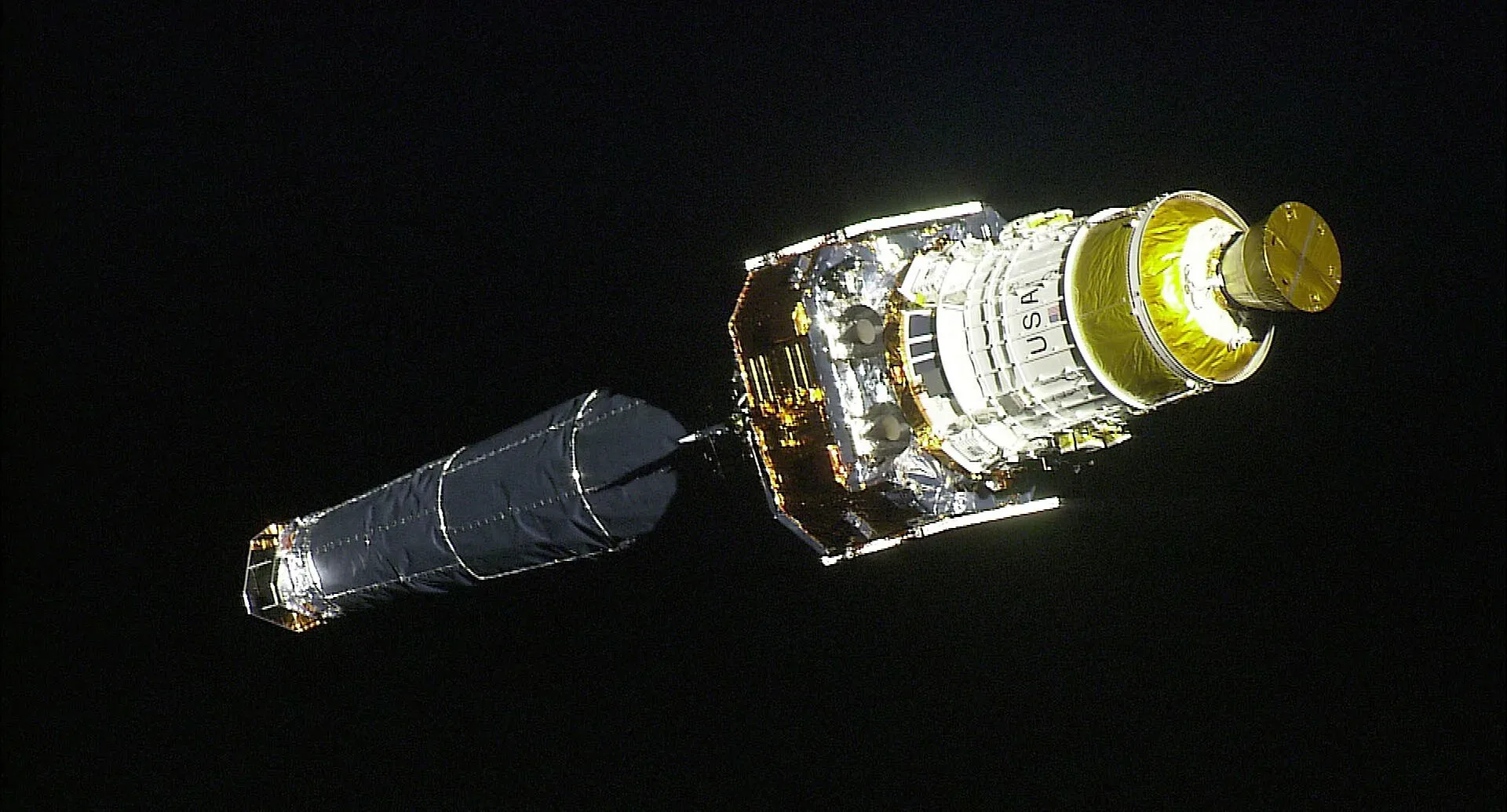
Astronomers using NASA's Chandra X-ray Observatory have solved a 15-year mystery: why a giant, unstable star 30 million light-years away keeps erupting in outbursts so bright they look like a star exploding, yet survives every time.
The answer, published on 9 November in The Astrophysical Journal, is a hidden companion. The team found that an unseen partner, either a black hole or a neutron star, pulls material away from the massive star every 113 days as the two orbit each other.
A "supernova impostor"
The star, known as AT 2016blu, lies in the spiral galaxy NGC 4559 and is estimated to be at least 33 times the mass of the Sun. It belongs to a class called luminous blue variables, hot and massive stars whose brightness changes dramatically. The best-known example is Eta Carinae.
AT 2016blu is a particularly extreme case. Between 2012 and 2026, astronomers recorded at least 27 bursts of visible light from it, roughly every 113 days. The flare-ups are so intense they resemble supernovae, the explosions that destroy massive stars, which is why it is called a "supernova impostor". Unlike a real supernova, the star survives.
"For 15 years, astronomers have been watching this star get really bright and then dim again on a regular basis," said Mojgan Aghakhanloo of the University of Virginia, who led the study. "Until we were able to get Chandra data at the right time, we couldn't figure out what was making this happen."
Catching it in the act
The key was timing. The team needed X-ray observations taken while the star was in outburst, and Chandra was the only X-ray telescope with sharp enough vision to separate AT 2016blu from another bright X-ray source nearby. Chandra observed it in March 2026, during an outburst captured from the ground by an automated telescope.
"This star's behavior was confusing at first because it kept acting like a supernova, but clearly it's not because it keeps surviving these outbursts about three times a year," said co-author Núria Torres-Albà, also of the University of Virginia.
Two firsts
NASA says this is the first X-ray detection of one of this class of erupting stars, and the first time one has been found with a black hole or neutron star as a companion. Each time the companion swings close, it strips gas from the star, setting off the outburst.
The discovery helps astronomers understand how the most massive stars live and die, and how pairs of stars can shape each other's fates.
A veteran telescope still making discoveries
Chandra was launched aboard the Space Shuttle Columbia in 1999 and has spent more than a quarter of a century studying the hottest and most violent places in the universe, from exploding stars to the surroundings of black holes. Astronomers around the world, including in the UK, have long used its data, and this result shows the observatory is still producing new science.
For stargazers at home, NGC 4559 is far too faint to see without a good telescope, but it is a reminder of how much is still happening in the night sky above Birmingham.
More in Science
All

Latest news
Featured posts
-
Things to do
Top 10 places to visit in Birmingham
-
Food and drink
The 12 most popular food spots in Birmingham
-
Things to do
The best laser tag locations in Birmingham