

Newborn whale sharks spotted in Indonesia's Saleh Bay, as around half the bay is set aside to protect them
Fishers' sightings of tiny whale sharks suggest the bay could be the first known pupping ground, and a new protected area could be confirmed in 2027.
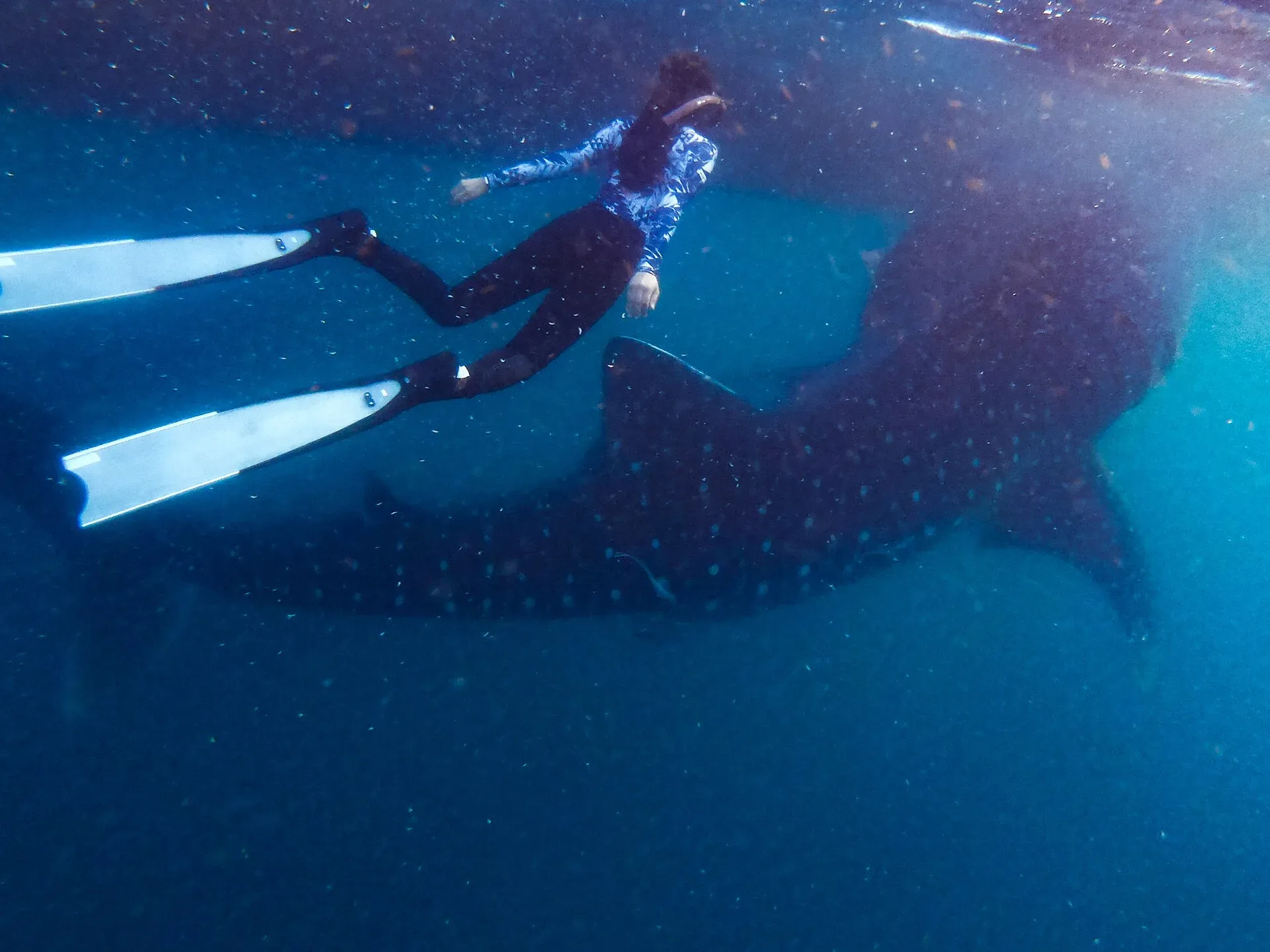
Around half of Saleh Bay in Indonesia is set to become a protected area for whale sharks, the world's largest fish, after fishers there spotted newborn whale sharks, a stage of life so rarely seen that the bay could turn out to be the first known whale shark pupping ground anywhere in the world.
In May, the governor of West Nusa Tenggara province formally designated 73,165 hectares of the bay, on Sumbawa Island in the shadow of the volcano Mount Tambora, for whale shark conservation. That extends an existing marine protected area to more than half of the 145,900-hectare bay, an area almost twice the size of New York City, and would cover 90% of the known whale shark hotspots there, Mongabay reported. Indonesia's Ministry of Marine Affairs and Fisheries is now reviewing the plans, with formal recognition hoped for in 2027.
Babies in the bay
Whale sharks, classed as endangered, have been monitored in Saleh Bay since 2015. The latest survey by the non-profit Konservasi Indonesia, published in July, recorded 174 individual sharks across 884 sightings, each identified by its unique pattern of spots.
Since August 2024, fishers have reported five sightings of very small whale sharks, between 1.2 and 1.5 metres long. Only 33 sightings of whale sharks under 1.5 metres have ever been reported in scientific papers.
"Their observations and cooperation made it possible to record an exceptionally rare life stage that conventional research surveys could easily miss," said Mochamad Iqbal Herwata Putra, focal species conservation senior manager at Konservasi Indonesia. He cautioned that the evidence for a nursery is still "preliminary", as births in the bay have not been confirmed.
"Protecting this bay means … protecting the future of the population worldwide," said Meizani Irmadhiany, senior vice president at Konservasi Indonesia.
Gentle giants under pressure
Whale sharks typically grow to around 12 metres, filter 6,000 litres of seawater an hour for plankton, krill and shrimp, and can live to 80, not breeding until they are about 30. The global population is estimated at 119,000 to 238,000. Indo-Pacific whale sharks, three-quarters of the total, have declined by 63% in 75 years, with fishing, accidental capture in nets and ship strikes the main threats.
From rivals to guides
The fishers of Saleh Bay fish at night from boats called bagan, using nets and lights, and the lights attract whale sharks too. They once saw the sharks as competitors for anchovies and sardines, and the sharks can still damage their nets. But Konservasi Indonesia is training fishers as guides to take tourists out responsibly, and a draft management plan is being drawn up with local communities.
"Income has increased quite a lot," said Adam, a fisher from the village of Labuan Jambu whose father, Hamzah, caught a young whale shark in 2024. "Tourism has brought things to life - people who previously had no work now have work - it provides an additional livelihood."
More in Environment
All
Latest news
Featured posts
-
Things to do
Top 10 places to visit in Birmingham
-
Food and drink
The 12 most popular food spots in Birmingham
-
Things to do
The best laser tag locations in Birmingham