

Planetary parade: Mars and Jupiter appear side by side before dawn, with Venus and Mercury close by
Four planets are visible to the naked eye in the eastern sky before sunrise, with Mars and Jupiter just a finger's width apart on 16 November.
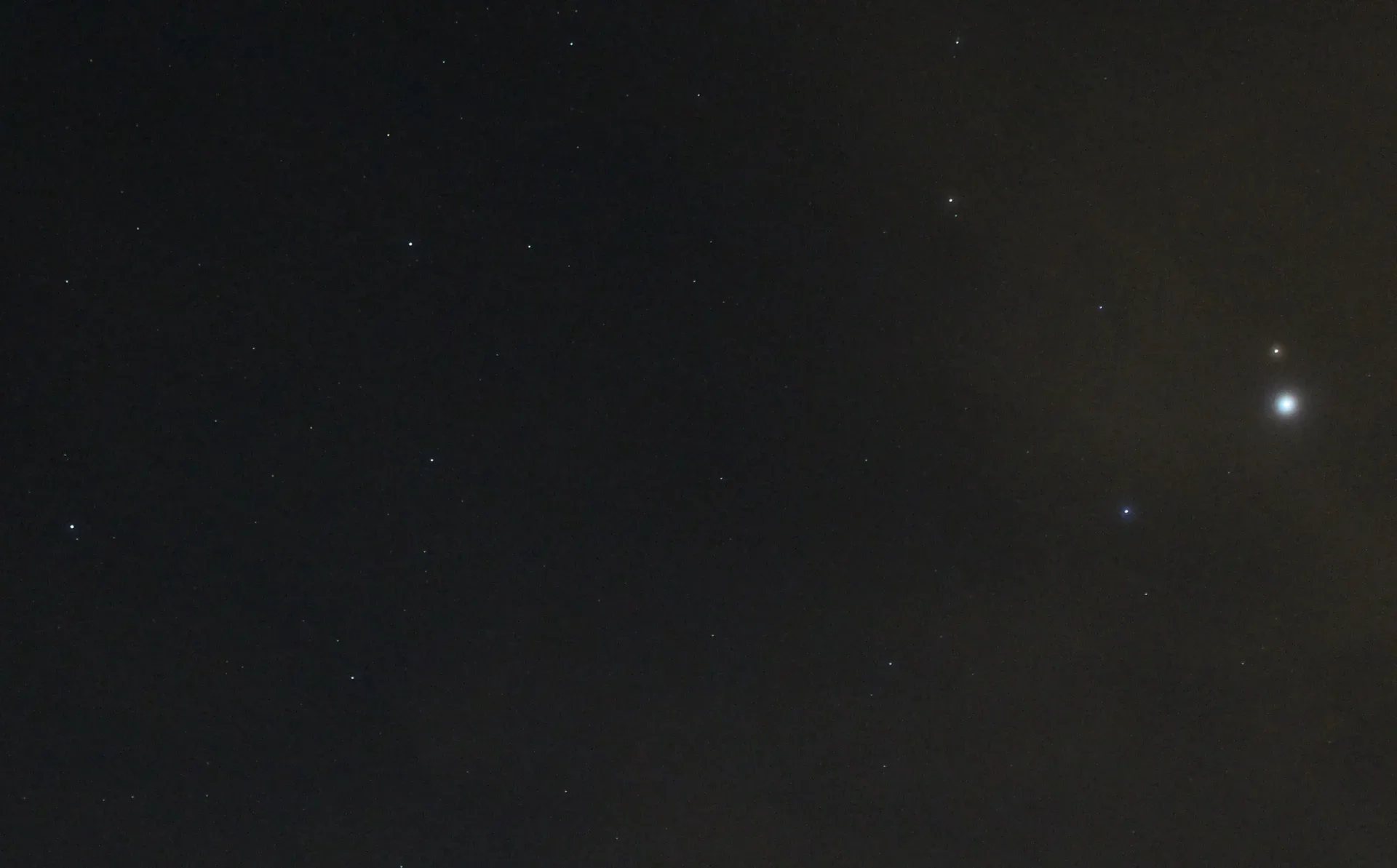
Early risers in Birmingham have a rare treat in the sky this week: a "planetary parade" of Mercury, Venus, Mars and Jupiter, all visible to the naked eye before dawn, with Mars and Jupiter appearing exceptionally close together this morning, Monday 16 November.
The four planets can be seen in the south-eastern to eastern sky in the hours before sunrise, BBC Weather reported, citing Royal Museums Greenwich.
Mars and Jupiter side by side
The highlight is a close pairing, or conjunction, of Mars and Jupiter on 15 and 16 November. Mars is high in the eastern sky, with Jupiter below it and appearing brighter.
"They will be separated by just 1.2 degrees, or roughly the width of a finger held at arm's length," said Gideon Bendavid-Walker, an astronomer at the Royal Observatory Greenwich. The pair will sit close to the bright star Regulus and may even look like a triple star.
How to find the other planets
Venus is the easiest to spot. After the Moon, it is the brightest object in the night sky, because it reflects more sunlight than any other major planet. It is also usually the closest planet to Earth, at times a mere 24 million miles away. It sits higher than Mercury and is visible earlier in the hours before sunrise. Do not confuse it with the bright star Spica nearby: stars twinkle, while planets shine steadily.
Mercury is the hardest to see. As the closest planet to the Sun and the smallest in the solar system, it is always close to the Sun's glare, visible only in twilight, dim and low to the horizon. Look to the south-east from somewhere with a wide, flat horizon.
Anyone with binoculars or a telescope can find bonus planets too: Uranus setting in the west before sunrise, and Saturn and Neptune in the evening sky.
Supermoons to come
From 24 November, a full Moon, the first of a run of four supermoons, will join the planets in the morning sky.
Tips for watching
BBC Weather said Sunday night's rain was expected to clear, leaving a mostly clear, dry night for much of the UK apart from the odd patch of mist or fog, so pre-dawn on Monday could offer better viewing conditions for more of the country.
To see the parade, find a spot away from light pollution with a good view of the eastern horizon, and give your eyes about 20 minutes to adjust to the dark.
More in Science
All
Latest news
-
16 Nov
New direct Birmingham to Crewe trains start on 13 December, the first step to a Manchester Airport link
-
16 Nov
Apple launches study of 200,000 people to test how useful AI answers to health questions really are
-
16 Nov
Asian Business Chamber's Diwali celebration at St Andrew's explores innovation, from cybersecurity to football
Featured posts
-
Things to do
Top 10 places to visit in Birmingham
-
Food and drink
The 12 most popular food spots in Birmingham
-
Things to do
The best laser tag locations in Birmingham