

Euclid space telescope maps 900 million galaxies and 15,000 cosmic lenses in hunt for dark matter
The first major Euclid data release covers 14% of the sky the mission will map and multiplies the number of known strong gravitational lenses fifteenfold.
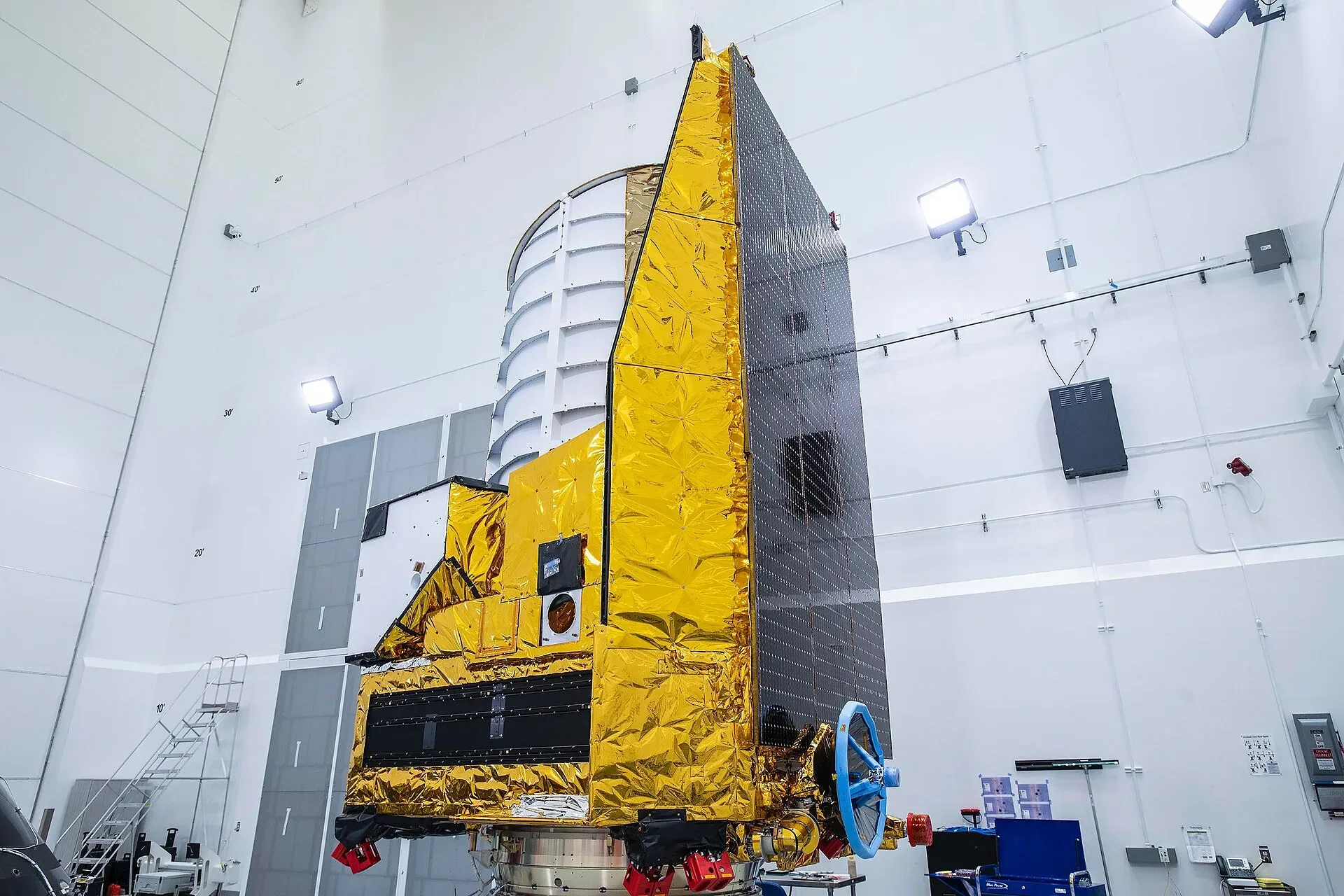
The European Space Agency's Euclid space telescope has released its first major batch of data, revealing more than 900 million galaxies and around 15,000 likely examples of a rare cosmic effect that could help scientists finally work out what dark matter is.
Euclid was launched in July 2023 to build the largest 3D map of the universe ever made, covering a third of the sky and more than 10 billion years of cosmic history, the Guardian reported. The UK plays a leading part in the mission, and its aim is to shed light on two of the biggest mysteries in science: dark energy and dark matter, which are thought to make up about 70% and 25% of the universe respectively.
"The biggest high-resolution image of the universe"
Professor Andy Taylor of the University of Edinburgh, who leads the UK science ground segment for the mission, said that although bigger surveys exist, none has the detail and information content of Euclid. The Hubble telescope produces images of incredible resolution, but covers a much smaller area of sky.
"The technological leap that's Euclid is that we can keep that high resolution, but now we can basically map huge volumes of the sky, huge volumes of the universe," he said. "It's the biggest high-resolution image of the universe we've ever had."
The new release covers about 14% of the sky that Euclid will eventually map. As well as the 900 million galaxies, it contains more than 60 million possible quasars, the blazing objects at the centres of distant galaxies powered by supermassive black holes.
Fifteen times more cosmic magnifying glasses
The most exciting find for many astronomers is the number of candidates for strong gravitational lensing. This happens when one galaxy sits in front of a more distant one: as Einstein predicted, the foreground galaxy's gravity bends space-time and the light from the galaxy behind it, creating bright arcs or rings. Dark matter strengthens the effect, so lenses act as a way of weighing it.
Scientists previously knew of about 1,000 strong lenses. The Euclid data contains about 15,000 probable cases, and Professor Taylor said an estimated 170,000 are expected by the end of the mission.
Stephen Serjeant, professor of astronomy at the Open University, said lensing reveals how dark matter clumps together, which depends on what it is made of. "So if you're looking for where the next breakthrough will be in the properties of dark matter and what dark matter actually is, there's a good chance - I can't say it's certain - but there's a good chance it might come from strong gravitational lensing," he said.
More to come next summer
A further data release is expected next summer, including results on how galaxies are distributed and on weak gravitational lensing, the subtle distortions of distant objects caused by dark matter in front of them.
"We can use that pattern of distortions to actually make a map of where all the dark matter is in the universe," Professor Taylor said. Comparing that map with different theories should show which ones fit, because each type of dark matter and dark energy should leave a slightly different pattern on the sky.
The sheer volume of data means there is room for many more discoveries. "No human eyeball is able to look at all of the Euclid data any more," he said. "It's now too big."
More in Science
All


Latest news
-
16 Nov
New direct Birmingham to Crewe trains start on 13 December, the first step to a Manchester Airport link
-
16 Nov
Apple launches study of 200,000 people to test how useful AI answers to health questions really are
-
16 Nov
Asian Business Chamber's Diwali celebration at St Andrew's explores innovation, from cybersecurity to football
Featured posts
-
Things to do
Top 10 places to visit in Birmingham
-
Food and drink
The 12 most popular food spots in Birmingham
-
Things to do
The best laser tag locations in Birmingham