

Oxford-developed Ebola vaccine to be tested in DR Congo as WHO trial named 'hope' expands
Vaccines from Oxford and Moderna will be the first designed for the Bundibugyo strain to be trialled during an outbreak.
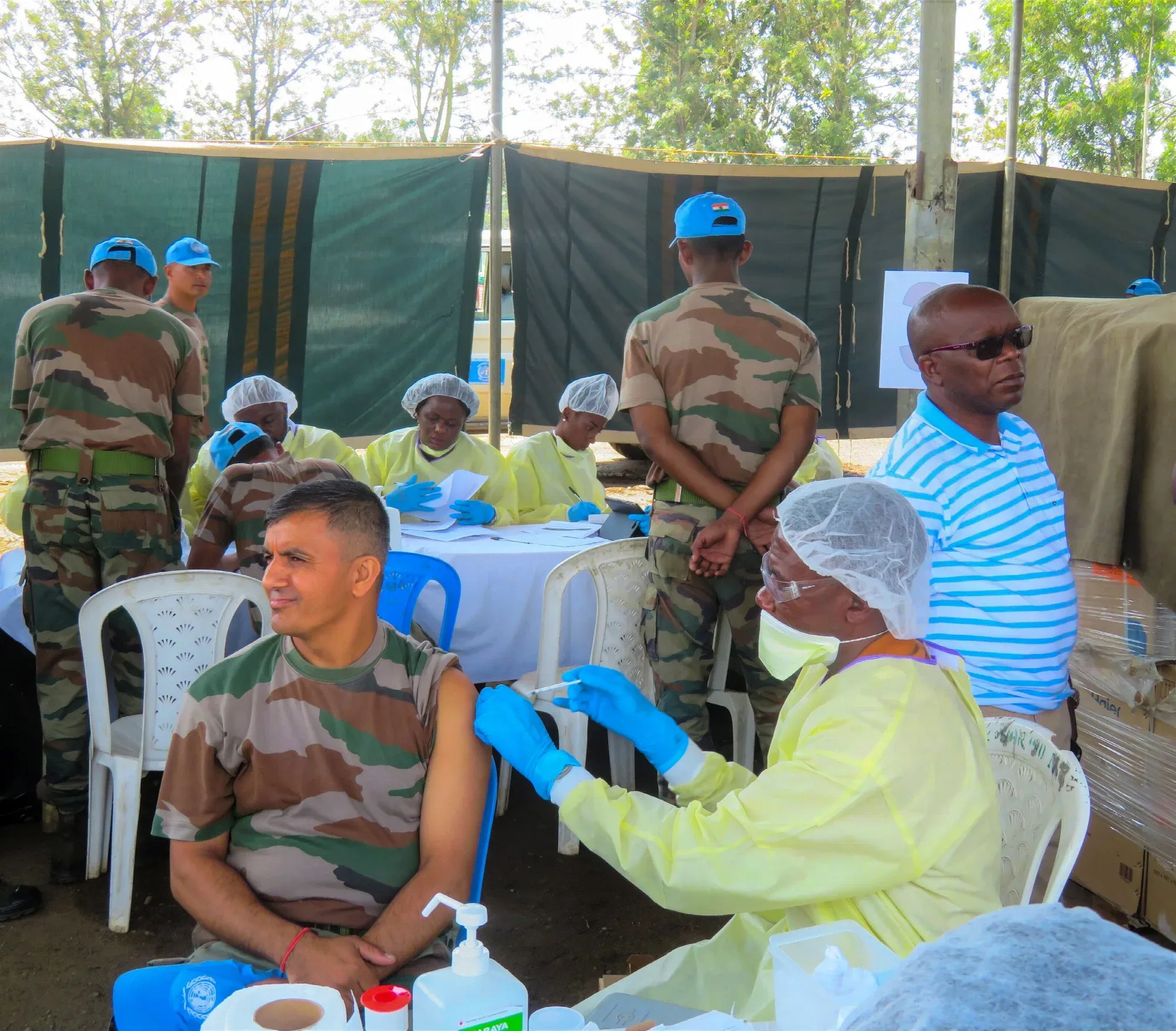
A vaccine developed at the University of Oxford is among two new candidates to be added to a clinical trial in the Democratic Republic of the Congo, as the country fights the largest Ebola outbreak in its history. It will be the first time vaccines designed specifically for the rare Bundibugyo species of the virus have been tested during an outbreak, the World Health Organization has announced.
The two candidates are ChAdOx1, developed by the University of Oxford with the Serum Institute of India, and mRNA-1469, developed by the American company Moderna. They were recommended for clinical evaluation this week by the WHO's independent Technical Advisory Group on Candidate Vaccines Prioritization.
"A testament to the power of science"
"The fact that these vaccines are ready to enter clinical trials is a testament to the power of science and partnership," said the WHO Director-General, Dr Tedros Adhanom Ghebreyesus. He stressed that vaccines alone would not end the outbreak, but said "they could become a powerful new tool for bringing it under control".
The outbreak, caused by the Bundibugyo species of Ebola, has been going on for nearly six months. According to UN News, there had been more than 10,500 confirmed cases and 5,126 deaths as of 1 November.
A trial named "hope"
The WHO is supporting the Tumaini multi-vaccine trial, named after the Swahili word for "hope". It was launched on 23 October in Bunia, the capital of Ituri province and the epicentre of the outbreak.
Tumaini is designed to test several vaccines within a single trial. It uses ring vaccination, in which the contacts of people with confirmed infection, and their contacts in turn, are offered the vaccine, creating a protective ring around each case. The WHO and its partners pioneered that approach during the West Africa outbreak a decade ago, when a trial in Guinea proved the Ervebo vaccine worked against the Zaire species of Ebola.
Ervebo is already being tested in the current trial to see whether it also protects against Bundibugyo. The two new candidates will join once they receive national approvals. Four vaccination rings have been set up so far, with more being prepared, and research into treatments is also moving forward.
The Oxford connection
The ChAdOx1 platform is the same technology behind the Oxford-AstraZeneca Covid-19 vaccine, which was given to millions of people in the UK and around the world. Its use against Ebola is another example of British science contributing directly to the global response to outbreaks.
The news comes as a UK doctor who had been working on the epidemic in the DRC was brought back to Britain for specialist treatment after testing positive for Ebola. The UK Health Security Agency said the patient was being cared for in the high-level isolation unit at the Royal Free Hospital in London.
Dr Renu Bindra, a deputy director at the agency, said there were "well-established and robust infection prevention and control protocols to limit the risk of onward transmission, and the risk to the wider public remains low". The agency stressed that Ebola does not spread through the air, but through direct contact with the bodily fluids of someone who has symptoms.
What comes next
The outbreak remains serious, and aid agencies continue to warn about the strain on health services in eastern DRC. But the arrival of vaccines made for this particular strain, tested in the field within weeks of the trial starting, offers a real chance to bring it under control.
More in World
All

Latest news
Featured posts
-
Things to do
Top 10 places to visit in Birmingham
-
Food and drink
The 12 most popular food spots in Birmingham
-
Things to do
The best laser tag locations in Birmingham