

Former egg collectors now guard Malaysia's critically endangered river terrapins
Since 2011 the village 'Terrapin Guardians' have incubated more than 13,000 eggs and released over 8,200 young terrapins.
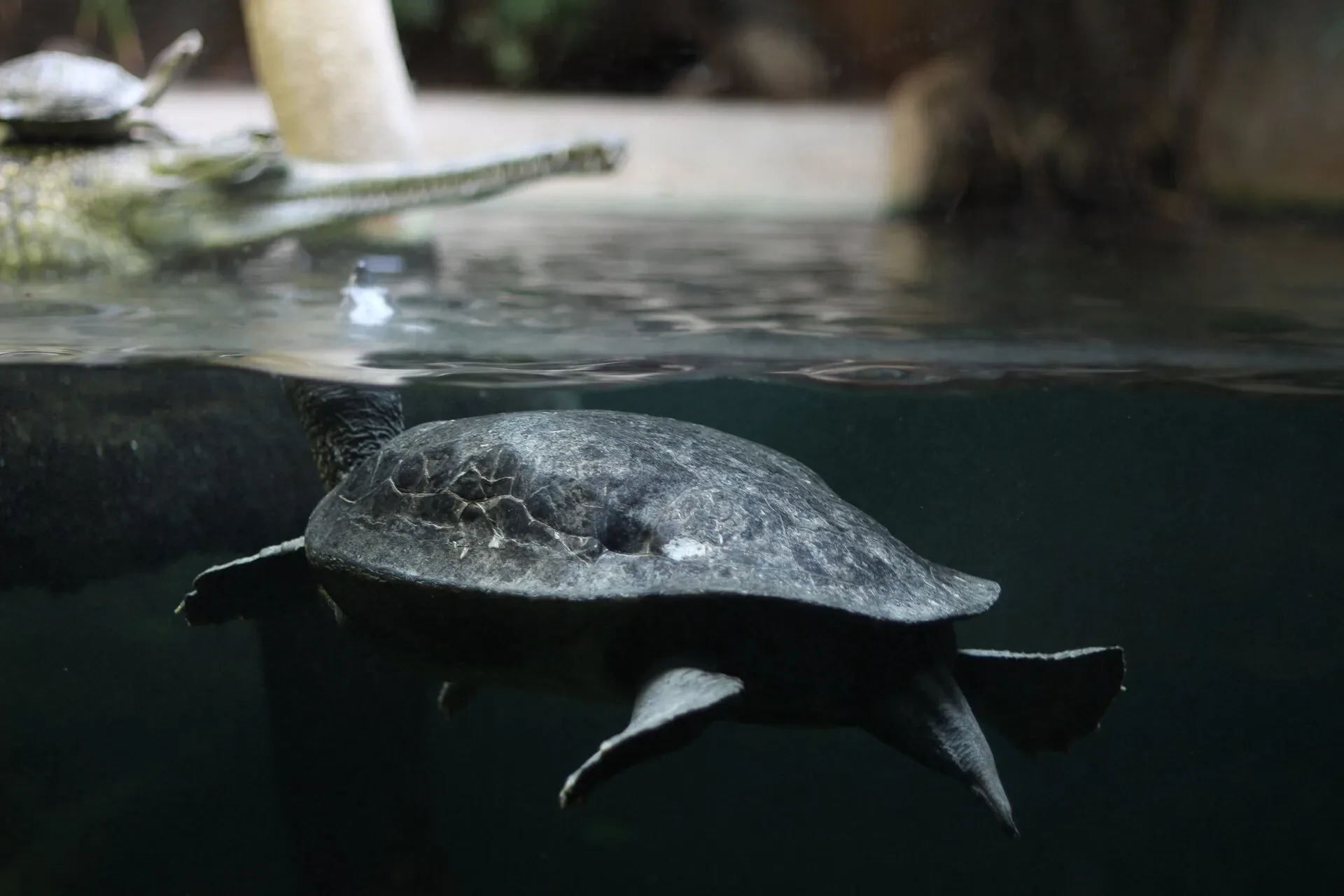
In a Malaysian village where people once gathered critically endangered terrapin eggs as a seasonal treat, the same villagers now spend their nights protecting them, and have helped return more than 8,200 young terrapins to the river.
The "Terrapin Guardians", or Geng Tuntung in Malay after the local word for river turtles, work along the river at Kampung Pasir Gajah in Terengganu state, on the east coast of Peninsular Malaysia. Their programme, led by the Turtle Conservation Society of Malaysia (TCS), began in 2011. Since then, according to TCS, the guardians have collected and incubated 13,224 eggs.
From egg collectors to protectors
The southern river terrapin (Batagur affinis) is listed as critically endangered on the IUCN Red List. Once widespread across South-East Asian river basins, much of its remaining wild population is found in Peninsular Malaysia. Since 2010, all freshwater turtles and tortoises have been fully protected under Malaysia's Wildlife Conservation Act.
All 13 guardians once harvested eggs themselves. Samsul bin Hamid, 52, a factory production line worker, stopped after learning more about the species through TCS. "I learned the ways to track terrapins through friends. Back then, they would invite me to go egg collecting, and I would go. It's just something we learned being part of the village," he told Mongabay.
Unlike the commercial wildlife trade, the eggs were traditionally shared among neighbours and eaten at home. Chen Pelf Nyok, co-founder and executive director of TCS, known as the "mother of terrapins", said winning people over took time. "It takes a lot of patience, relationship-building and mutual respect," she said. "We engage with local communities, explain why collecting and eating terrapin eggs is illegal in Malaysia, and encourage people to become part of the conservation solution rather than simply telling them to stop."
A night on the riverbank
During the nesting season, from January to March, the guardians work from 10pm until dawn, watching for the tracks of a heavy shell on the sand. When a terrapin comes ashore to nest, they wait, then weigh, measure and microchip her before securing the eggs. These are taken to the TCS hatchery, incubated for three months, and the hatchlings cared for until they are ready to be released.
The work is passing to a new generation. Mohd Azriezal bin Mahad, 29, whose late father worked with TCS from the start, officially joined this year. "I feel happy to continue my dad's work," he said.
Changing minds matters most
Experts say success is measured less by the number of hatchlings than by whether behaviour changes for good. "The most important contribution of community-based programs is their social impact," said Natalia Gallego-García of the IUCN's Tortoise and Freshwater Turtle Specialist Group. "They transform how local communities perceive and value a species, creating opportunities for education and fostering a deep sense of ownership."
The threats that remain
Not everyone in the village has stopped collecting eggs, and monitor lizards can wipe out nests. Sand mining for the construction industry is another serious threat, because it destroys the sandbanks the terrapins nest in. "Terrapins cannot simply move to another river when their nesting habitat disappears," Pelf said. TCS currently monitors six sandbanks along the river, and the guardians, once the terrapin's hunters, are now its best hope.
More in World
All

Latest news
Featured posts
-
Things to do
Top 10 places to visit in Birmingham
-
Food and drink
The 12 most popular food spots in Birmingham
-
Things to do
The best laser tag locations in Birmingham