

Aston University wins £500,000 to help existing internet cables carry more data
A four-year Leverhulme Trust project will test whether Koopman operator theory can tame signal distortion in fibre-optic cables.
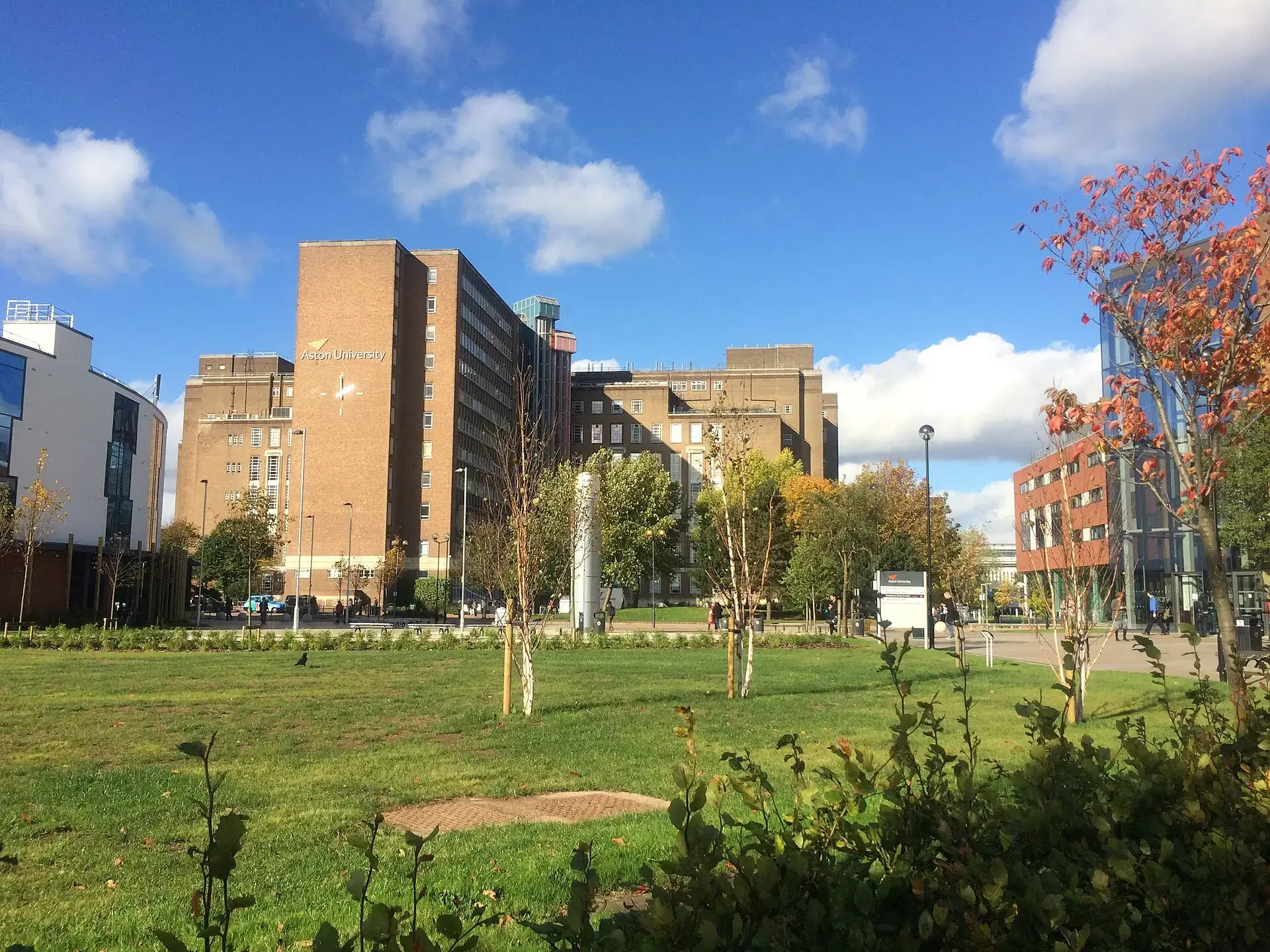
Scientists at Aston University in Birmingham have been awarded almost £500,000 to find out whether a new branch of mathematics could help the fibre-optic cables that carry the internet move more data, without the cost of digging up roads to lay new ones.
The four-year project has £499,996 of funding from the Leverhulme Trust and is led by Professor Yaroslav Prilepskiy and Professor Sergei Turitsyn of the Aston Institute of Photonic Technologies, the university announced.
The problem with turning up the power
Fibre-optic cables send information around the world as pulses of light travelling through thin strands of glass. As our appetite for streaming, video calls and cloud services grows, there is a limit to how much data those strands can carry.
The obvious answer, making the light signals stronger, only works up to a point. Beyond it, stronger signals become distorted and interfere with other signals travelling through the same cable, making the information harder to read at the other end. Adding more wavelengths or installing more advanced fibre are alternatives, but both mean significant spending on new equipment.
Engineers already have ways of correcting distortion at the receiving end of a cable, but these can demand so much computing power that they are hard to use in real time on busy networks.
"We tend to think of the internet as something that exists in the cloud, but much of it depends on physical infrastructure that has to work harder as demand grows," said Yaroslav Prilepskiy, of the Aston Institute of Photonic Technologies. "Building more capacity is not always simply a matter of laying more fibre. We also need to understand how to make the best possible use of the networks that are already in place. That is one of the reasons this research matters."
A different way of doing the sums
The project, called KOMET-COM (Koopman Operator Method for Optical Communications), will use a technique known as Koopman operator theory to build a new model of how light behaves inside fibre-optic cables. The approach lets researchers look at complicated behaviour in a different mathematical way that is easier to analyse, and the team wants its model to reflect what really happens to light inside real cables.
Professor Turitsyn, director of the institute, said: "One of the problems in high-speed broadband optical communications is that the mathematics describing what happens to light inside a fibre can become extremely complicated. The challenge is to find a way of capturing that behaviour accurately without making the calculations prohibitively demanding."
"Koopman operator theory gives us a different way of approaching this problem. What we want to establish is whether it can give us a model that is both practical and reliable enough to be useful in real communication systems."
Tested on Aston's own network rig
The researchers will test the approach with computer simulations and with experimental data from Aston's optical communications testbed, checking how well it models and corrects distortion in realistic conditions, including signal loss and noise from amplifiers.
If it works, the university says, it could help engineers fix some of the problems that affect light signals on their journey, allowing existing networks to carry more data or send it further, while cutting the computing power needed to model how information travels.
It is early-stage research, and there is no guarantee the method will prove practical. But if it does, networks could squeeze more out of the glass already in the ground, which is what every streamed film and video call in Birmingham ultimately travels through.
More in Technology
All
Latest news
-
16 Nov
Apple launches study of 200,000 people to test how useful AI answers to health questions really are
-
16 Nov
Asian Business Chamber's Diwali celebration at St Andrew's explores innovation, from cybersecurity to football
-
16 Nov
Almost half of the region's exporters plan to break into new markets, and none expect to cut back
Featured posts
-
Things to do
Top 10 places to visit in Birmingham
-
Food and drink
The 12 most popular food spots in Birmingham
-
Things to do
The best laser tag locations in Birmingham