

World's mangrove forests are growing again after decades of loss, 40 years of satellite images show
Nearly 2,000 sq km of mangroves have returned since 2010, led by Asia, Australia and South America, with Burma one of the biggest turnarounds.
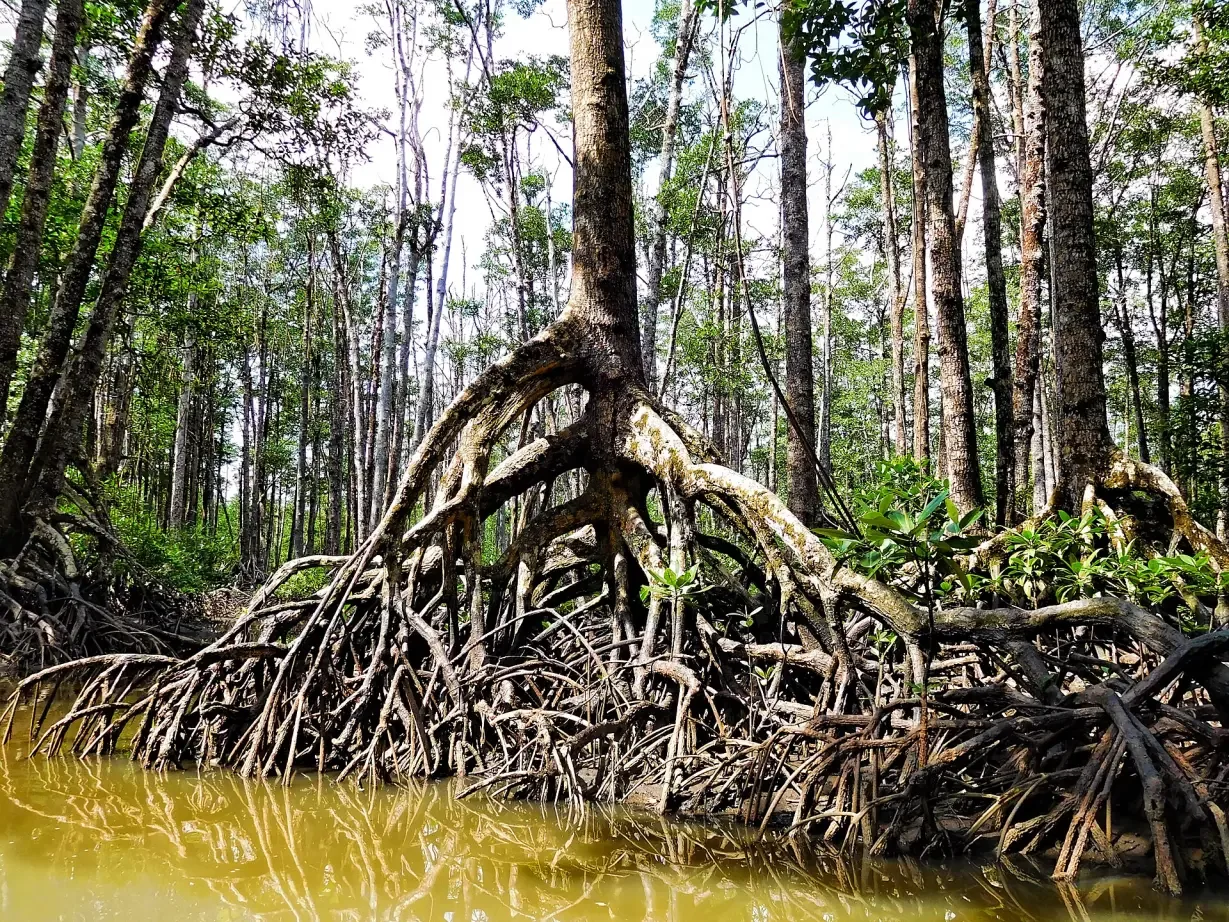
After decades of decline, the world's mangrove forests are growing again. Satellite images going back 40 years show a global rebound that began around 2010, with nearly 2,000 square kilometres of new mangroves since then, NASA's Earth Observatory reported this week.
The research, published in the journal Science and highlighted by NASA, analysed Landsat satellite images collected between 1984 and 2023. It found losses of nearly 3,000 square kilometres between 1984 and 2010, followed by an unexpected increase of nearly 2,000 square kilometres after 2010, led by expansion in Asia, Australia and South America.
Denser and healthier, as well as bigger
The scientists also found that many of today's mangrove forests have denser, more closed canopies than in 2010, a sign of healthier, less degraded forest, particularly in South America.
"Other research groups have mapped and analyzed long-term changes in select regions, but these are the first global mangrove maps that cover such a long period," said Zhen Zhang, an environmental scientist at Tulane University. "About two-thirds of the expansion was due to mangroves colonizing new areas and the other third due to restoration and regrowth in degraded areas."
Burma's turnaround
One of the most striking reversals has been in Burma, also known as Myanmar. The country lost mangroves rapidly in the 1980s and 1990s as farming, fish and shrimp ponds and firewood cutting spread along the coast, losing 28.6% of its mangrove area between the 1980s and 2010. Since then, its mangrove area has grown by about 10%.
The researchers credit greater awareness and restoration work after the devastating Indian Ocean tsunami of 2004, stronger legal protection for forests, and heavy deposits of sediment that created new mudflats for mangroves to colonise. In Palaw Township, in the Myeik District, mangroves have regrown in abandoned rice fields, and people on nearby Pyin Bukyi Island have tried conservation and tree-planting projects.
Elsewhere, new mudflats at the mouth of the Amazon and in northern Australia have been colonised, and warmer temperatures with fewer freezes have let mangroves spread into places that were once too cold, including the south-eastern United States.
Small trees, huge value
Mangroves average only about 13 metres tall, but they matter far more than their size suggests. Mangrove ecosystems can store up to four times as much carbon as taller inland tropical forests, protect coastal communities from erosion and storm surges, and their stilt-like roots provide nursery grounds for fish, shrimp and crabs.
Not a reason to relax
The picture is not good everywhere. Heavy losses in the Niger Delta have reduced mangrove area in West and Central Africa since 2010, while tropical cyclones have badly damaged mangroves in North America and southern Africa.
"The global successes we've seen with mangroves during the past decade should not be seen as grounds for complacency," Zhang said. "This underscores that conservation and slowing deforestation can lead to huge positive impacts when coupled with natural expansion and regeneration."
The findings come as world leaders gather at the COP31 climate summit this week.
More in World
All
Latest news
-
16 Nov
New direct Birmingham to Crewe trains start on 13 December, the first step to a Manchester Airport link
-
16 Nov
Apple launches study of 200,000 people to test how useful AI answers to health questions really are
-
16 Nov
Asian Business Chamber's Diwali celebration at St Andrew's explores innovation, from cybersecurity to football
Featured posts
-
Things to do
Top 10 places to visit in Birmingham
-
Food and drink
The 12 most popular food spots in Birmingham
-
Things to do
The best laser tag locations in Birmingham