

Robot boats and AI take over the dangerous job of hunting sea mines, keeping sailors out of harm's way
Systems developed by Thales with the Royal Navy and French navy map the seabed in 3D, needing a fraction of the crew of a minehunter.
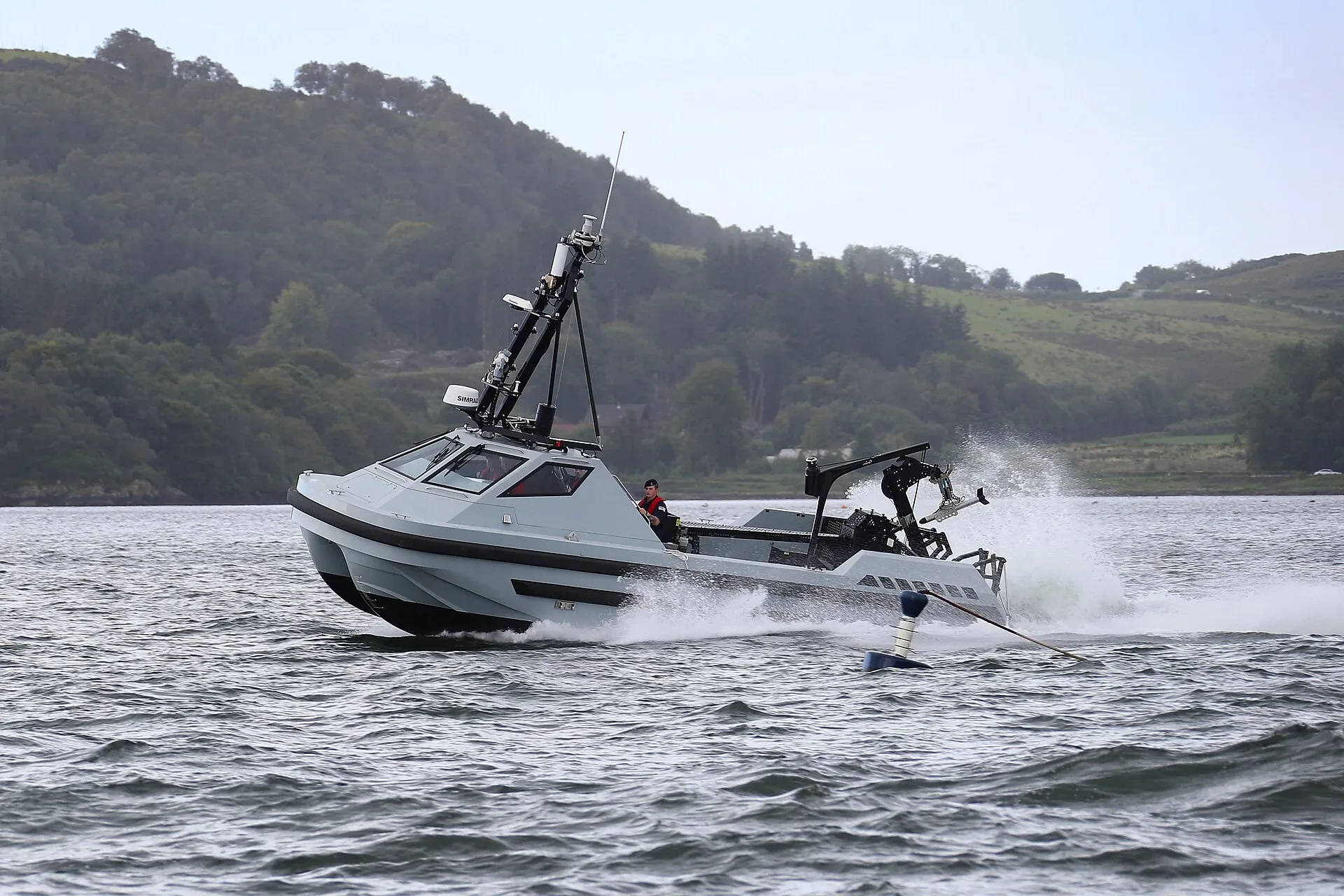
Robot boats and submarines are taking over one of the most dangerous jobs at sea, hunting for mines, keeping sailors out of harm's way, and British and French navies are among those leading the way.
BBC News reported on 11 November how autonomous systems, monitored from the shore, are increasingly doing the work that once required specialist minehunting ships crewed by around 80 sailors. The uncrewed systems might need only 20 people, working in shifts on land.
Why mines are such a threat
Modern sea mines can rest on the seabed and detonate when they detect a ship's acoustic or magnetic signature, creating a pressure wave strong enough to break a vessel's keel. Others float, rise from the seabed or are powered towards a target.
"Mines are a very cheap way of waging a naval war, as the Royal Navy is acutely aware," said Ian McFarlane, a naval architect at the French defence group Thales. The mere threat of mines can stop shipping, which is why finding them quickly and safely matters for trade.
A robot that maps the seabed
Cooperation between Thales, the Royal Navy and France's Marine Nationale has produced an uncrewed surface vessel packed with sensors. It tows a five-metre sonar unit that takes a high-resolution look at the seabed and builds a 3D picture refined by artificial intelligence. The latest mines are designed to blend into their surroundings, and the software is trained to spot anything that looks like one.
Autonomous systems are cheaper than conventional minehunters, and they can be flown to where they are needed along with containerised control centres.
Twenty years in the making
The technology has been under development for two decades. During the 2003 Iraq war, the US Navy used a torpedo-shaped robot called the Remus 100 to search the seabed with sonar, sparing divers a difficult and dangerous task.
Steve Prest, an associate fellow at the RUSI defence think tank, introduced uncrewed mine hunting into the Royal Navy and became its first fleet robotics officer in 2014. "There is a bunch of ways to look for a mine using robot boats or robot subs, and while you can't prove the negative, that no mines are there, you can reduce the risk," he said.
He expects the role of autonomy to grow. "We'll see more use of autonomy but also the missions and capability will expand. And AI will be analysing data from those vessels on the spot as opposed to data being analysed when a drone returns."
People still matter
Mr Prest says the robots only make a real difference as part of a joined-up fleet that shares data. "Uncrewed or autonomous vessels are not the operating system. They are applications running on it," he said. The Royal Navy has set out its concept of a hybrid navy, mixing drones with conventional warships.
For the sailors who once had to sweep for mines in person, and the merchant crews who rely on safe sea lanes for everything from fuel to food, technology that takes people out of danger is a welcome advance.
More in Technology
All


Latest news
Featured posts
-
Things to do
Top 10 places to visit in Birmingham
-
Food and drink
The 12 most popular food spots in Birmingham
-
Things to do
The best laser tag locations in Birmingham