

HS2 finishes two-mile Calvert cutting in a record year for earthworks between London and Birmingham
1.6 million cubic metres of earth were moved in Buckinghamshire, and the contractor is set to end the year more than 40% ahead of target.
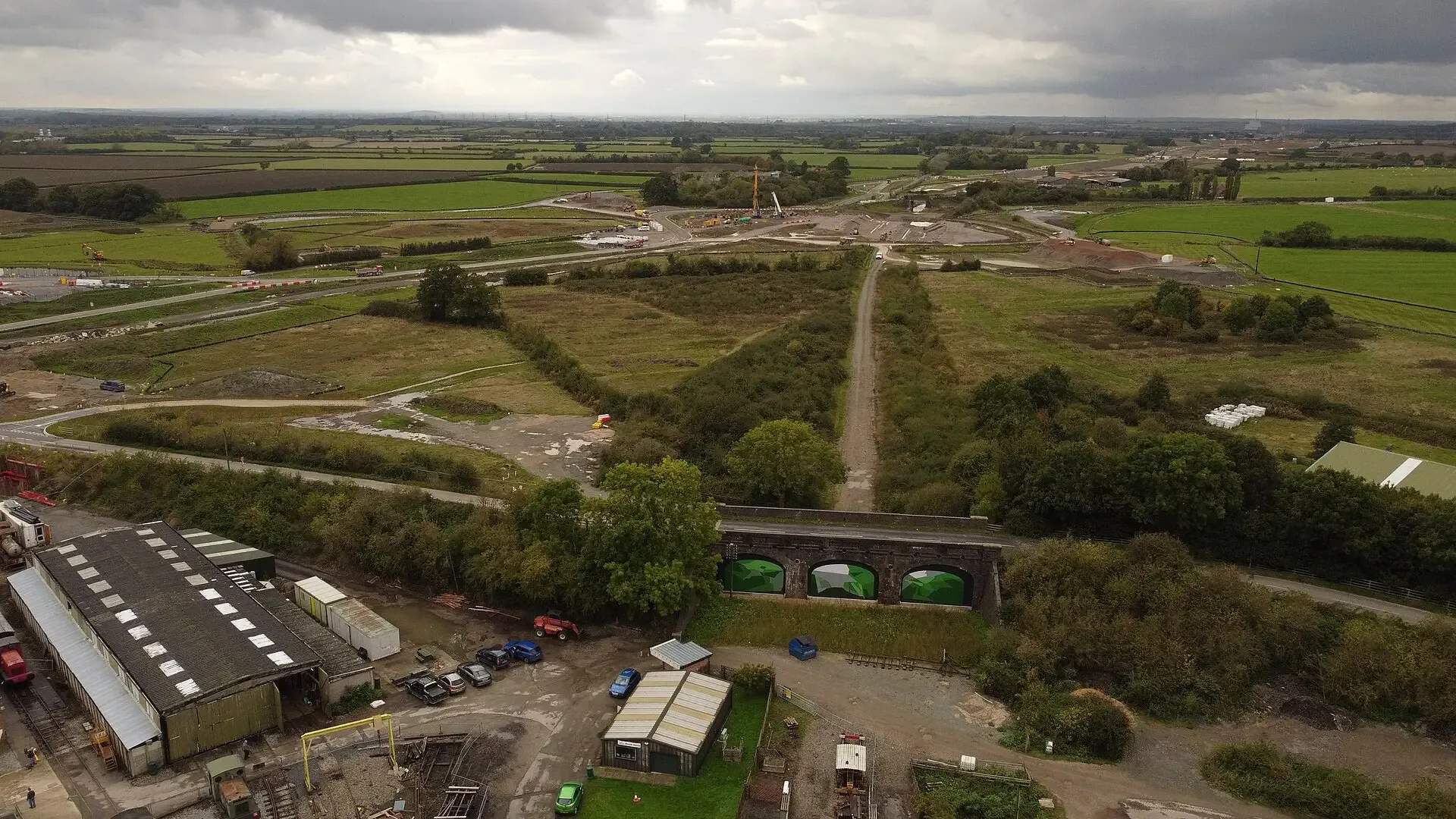
Workers building HS2 have finished digging a two-mile cutting in Buckinghamshire, the project's second-longest, at the end of what HS2 calls a record year for earthworks on the line between London and Birmingham.
The 2.1-mile (3.4km) Calvert cutting will carry high-speed trains past the villages of Calvert Green and Steeple Claydon, roughly following the route of the old Great Central Railway, which closed in the 1960s. Where the old railway ran on an embankment, the new one has been set down in the landscape, and it will be crossed by five major road and rail bridges.
274 Olympic pools of earth
Work on the cutting began in 2022, led by HS2's main works contractor in the area, EKFB, a team made up of Eiffage, Kier, Ferrovial Construction and BAM Nuttall. With specialist earthmovers Kier Transportation, they moved more than 1.6 million cubic metres of material, the equivalent of 274 Olympic-sized swimming pools, to create a level surface for the track.
The earth and clay is being reused elsewhere on the project to build embankments, noise barriers and landscaping that help blend the railway into the countryside.
EKFB, whose sites run from the Chilterns to South Warwickshire, looks set to end the year more than 40% ahead of its earthworks target. It is one of two major contractors that have renegotiated their contracts as part of HS2 chief executive Mark Wild's reset of the project, which is designed to control costs and improve productivity.
"You can really get a sense of what the railway will look like"
HS2 Ltd project director Bill Clowes said: "It's great to see how much progress has been made at Calvert and our other major cuttings this year. Boosted by the unusually dry summer, we were able to shift an incredible amount of material and for the first time, you can really get a sense of what the railway will look like once complete."
"This year's record numbers would not have been possible without the huge amount of planning and preparation they've put in over the last few years, so that when we had the dry weather, we could really hit the ground running and make the most of every hour of the working day."
Room for East West Rail
The cutting starts south of Calvert Green and ends near Twyford. It is crossed by four major roads and the East West Rail line, along with three drainage culverts and 12 major utility diversions, so the bridges had to be built before the dig could be finished. The last of them, carrying West Street, opened earlier this month.
Unusually, the southern half of the cutting is 56 metres wide, leaving space for two conventional railway lines alongside the high-speed tracks, so Network Rail can one day reinstate the old freight line between Aylesbury and Calvert to link with East West Rail.
EKFB project manager Gavin Llewellyn said: "Completing the earthworks at Calvert Cutting is a major achievement and an important step towards the next phase of construction. Over the winter, our teams will focus on preparing the track bed for the railway."
What it means for Birmingham
With the bulk excavation complete, teams are now turning to drainage, before a layer of aggregate is laid to form a stable base for the track. Every finished section brings closer the day when high-speed trains link London with Birmingham's new Curzon Street station in the city centre and Interchange station near the airport.
More in Transport
All
Latest news
Featured posts
-
Things to do
Top 10 places to visit in Birmingham
-
Food and drink
The 12 most popular food spots in Birmingham
-
Things to do
The best laser tag locations in Birmingham