

Export bar on bust that defined the Black Prince's image, once kept at Warwick Castle
The 1735 Rysbrack marble is temporarily stopped from leaving the UK while a museum tries to raise £496,000 to save it.
A marble bust that shaped how Britain pictures one of its most famous medieval princes, and which once stood at Warwick Castle, has been temporarily barred from leaving the country. The Heritage Minister, Baroness Twycross, has placed an export bar on the bust of Edward of Woodstock, known as the Black Prince, giving a UK museum or gallery the chance to buy it for the nation.
The image that stuck
The bust was carved around 1735 by the Flemish sculptor Michael Rysbrack, who did much of his most famous work in England and was renowned for his portrait busts. It was part of a series of 18th-century portraits of the Black Prince that came to define how he was shown. In the nearly three centuries since, it has been copied countless times and has become the accepted image of the prince.
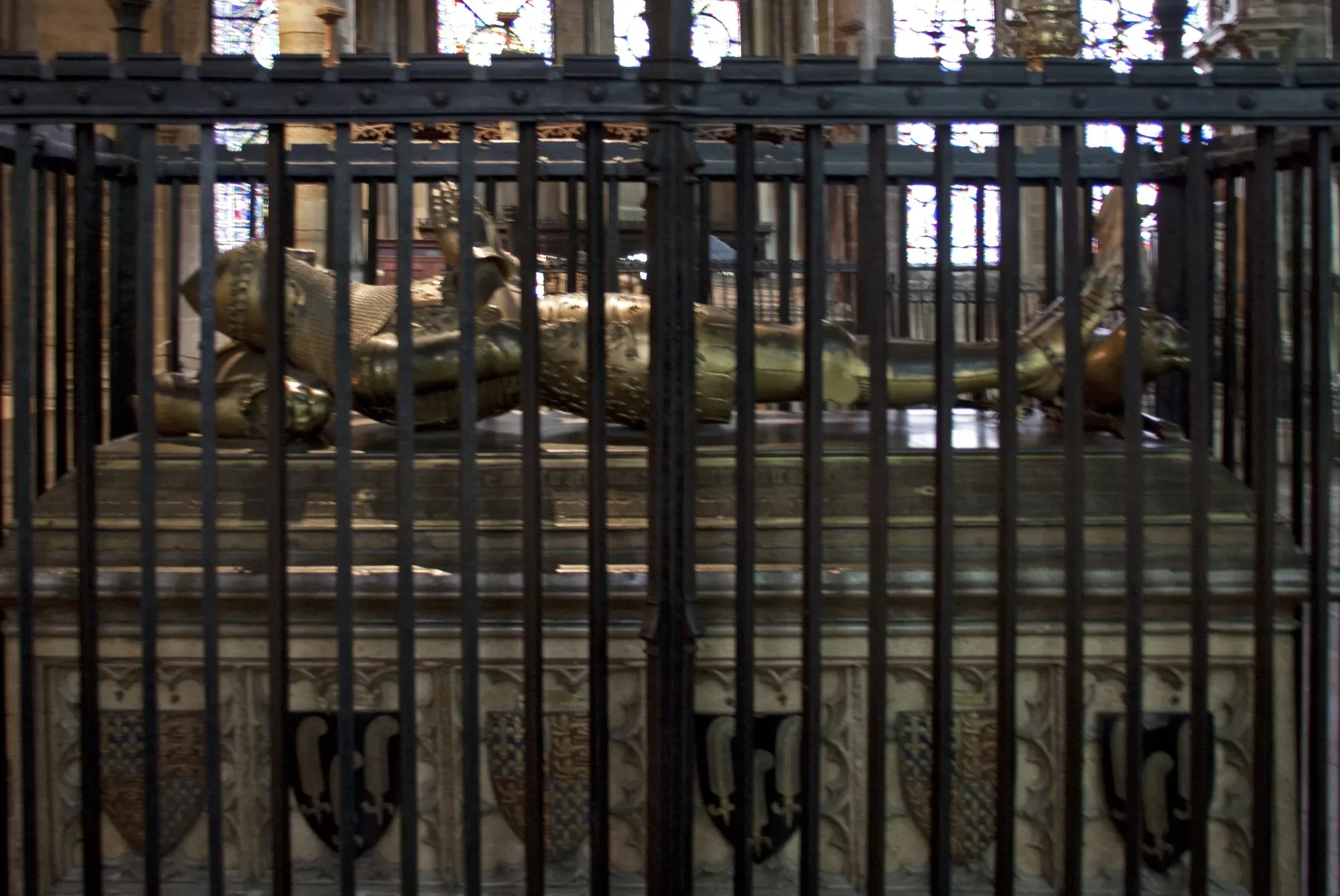
Edward of Woodstock (1330-1376), the son of King Edward III, was a celebrated military commander during the Hundred Years War, winning major victories including the Battle of Poitiers in 1356. He is said to have become known as the Black Prince because of the colour of his armour. His tomb, with its gilded effigy, lies in Canterbury Cathedral.
Baroness Twycross said: "This striking sculpture of Edward the Black Prince still defines how we imagine this legendary figure in British history. For nearly three hundred years it has shaped how we tell the story of our medieval history and I hope that in a public gallery in the UK it can tell that story much more powerfully for many more years to come."
A Warwick connection
The bust was probably commissioned by Frederick, Prince of Wales, for the Octagon Temple at Carlton House in London. It is thought to have passed to Lady Archibald Hamilton and then to her daughter Elizabeth, who married Francis Greville, 1st Earl of Warwick. By 1806 it was recorded in the State Bedroom at Warwick Castle, where it stayed in the family until it was sold at Sotheby's in 2005.
Stuart Lochhead, a member of the committee that advises on the export of works of art, described it as "one of the finest and earliest known busts of this genre". He explained that Georgian patrons and the royal court used portraits like this to align themselves "with a lineage of English kingship and chivalric virtue", and said its export "would be a great loss to scholarship and our understanding of Georgian society".
How an export bar works
The minister acted on the advice of the Reviewing Committee on the Export of Works of Art and Objects of Cultural Interest, which found the bust met two of the Waverley criteria: its outstanding connection with British history and national life, and its outstanding significance for the study of 18th-century British sculpture.
A bar does not stop a sale. It pauses the export licence so that a UK buyer can try to match the price. The first deferral period runs until 5 February 2027. If a serious offer is made, a second period of four months follows. The recommended price is £496,044.51, plus VAT of £9,920.89.
Museums often raise money for purchases like this through public appeals, charitable funds and philanthropy, and a private individual can also buy an object and donate it to the nation. Interested buyers can contact the committee through Arts Council England.
If the bust is saved, visitors in the UK will be able to see in person the face that, for nearly 300 years, has been the face of the Black Prince.
More in National
All
Latest news
Featured posts
-
Things to do
Top 10 places to visit in Birmingham
-
Food and drink
The 12 most popular food spots in Birmingham
-
Things to do
The best laser tag locations in Birmingham