

Aston scientists create bee-free 'vegan honey' that kills a drug-resistant bacterium
Adding key ingredients from mānuka honey to a sugar-syrup base produced formulas that killed Mycobacterium abscessus in the lab.
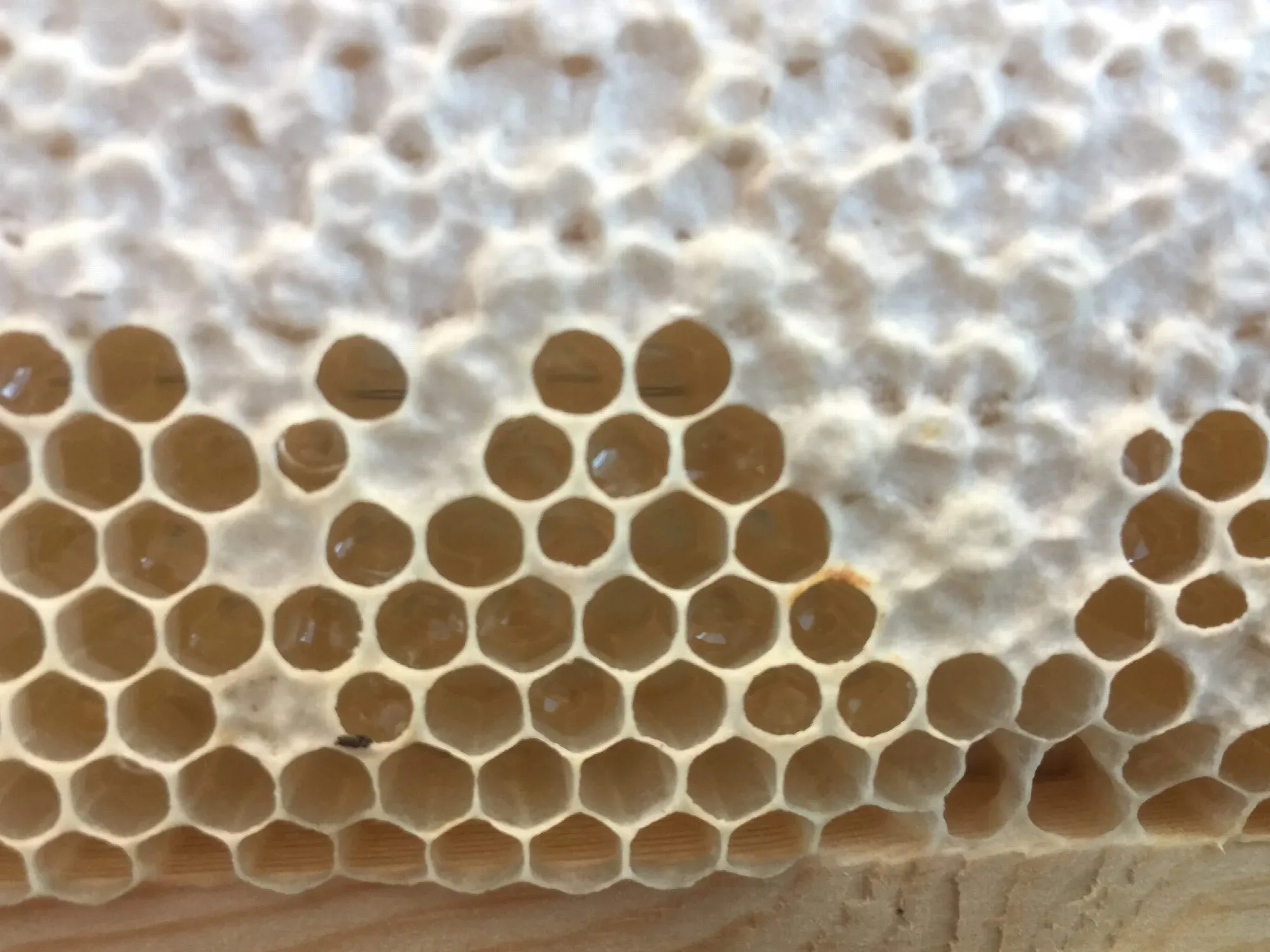
Scientists at Aston University have shown that a bee-free, "vegan honey" can be made to kill a highly drug-resistant bacterium, by recreating the key ingredients that give medical mānuka honey its germ-fighting power.
The research, published in the journal PLOS One, could open the way to sustainable, honey-inspired wound care products that do not depend on bees at all.
Why look for an alternative?
Mānuka honey, made in New Zealand by bees that feed on the mānuka bush, is known for its unusual antibacterial properties and has been studied as a possible alternative to antibiotics. But it is expensive, and as a natural product it can vary from batch to batch. Honeybee numbers are also declining, putting pressure on supplies.
Vegan honey alternatives are made from sugar syrup and copy the consistency, sugar structure and taste of honey with no bee-derived ingredients. They have become more popular with the rise of veganism.
Dr Jonathan Cox, senior lecturer in biosciences at Aston University, wanted to find out whether the antimicrobial parts of medical honey could be recreated in a fully vegan, synthetic formula, and which components are responsible for the effect.
Taking on a tough bacterium
Earlier work by Dr Cox's group had shown that mānuka honey is active against Mycobacterium abscessus, a highly drug-resistant bacterium that can cause hard-to-treat infections of the lungs, skin and soft tissue. New treatments for it are urgently needed.
The team tested vegan honey formulas against cultures of the bacterium, looking at whether they could stop it growing and whether they could kill it outright.
Two ingredients found in mānuka honey proved particularly effective when added to the vegan base: methylglyoxal, known as MGO, and hydrogen peroxide. The best results came from formulas combining MGO with enzyme-based systems that generate hydrogen peroxide inside the honey. The most effective versions killed the bacterium.
"Next-generation antimicrobial therapies"
Dr Cox said: "Longer term, this research could help support the development of sustainable honey-inspired antimicrobial products for wound care or other topical applications, without relying on bee-derived ingredients.
"The work also provides insight into how natural honey functions, which may help guide the design of next-generation antimicrobial therapies."
What comes next
The next steps are to fine-tune the formulas and better understand how the different antimicrobial ingredients work together. Future studies could test the vegan honeys against other bacteria that cause serious disease.
It is early-stage laboratory work, and any product for patients would need much more testing. But with antibiotic resistance one of the biggest challenges facing modern medicine, a cheap, consistent and bee-free alternative inspired by one of nature's oldest remedies is a promising idea, and one being developed right here in Birmingham.
More in Science
All
Latest news
Featured posts
-
Things to do
Top 10 places to visit in Birmingham
-
Food and drink
The 12 most popular food spots in Birmingham
-
Things to do
The best laser tag locations in Birmingham