

A zoo at Edgbaston and a 'Whitehall' on Broad Street: the 1918 vision that shaped Birmingham
William Haywood's The Development of Birmingham was never built as drawn, but it laid the ground for Centenary Square.
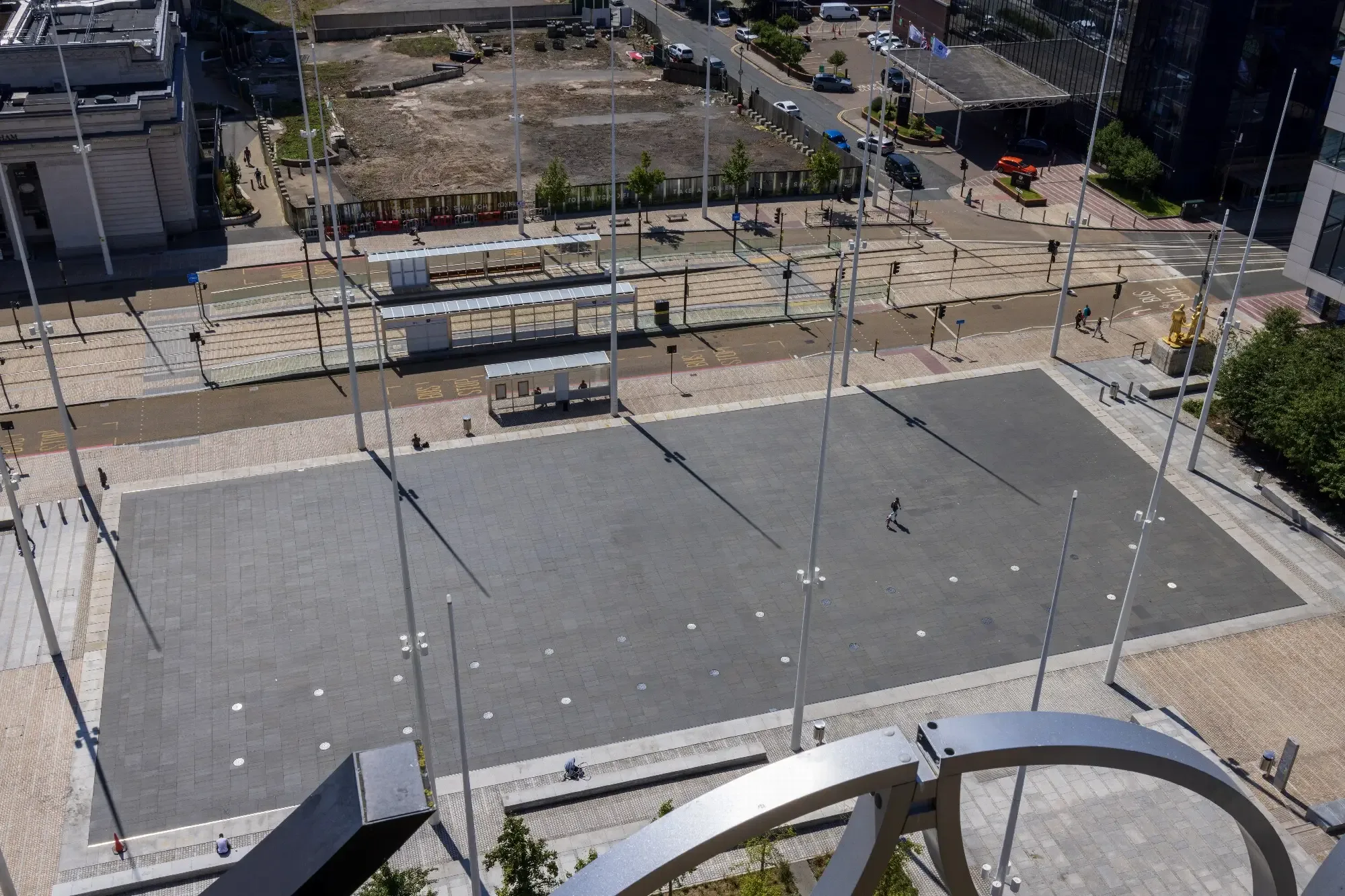
A zoo and pleasure grounds around Edgbaston Reservoir, a "People's Hall" with a Turkish bath at Lancaster Circus, and a grand civic quarter on Broad Street: a remarkable 1918 vision for Birmingham has been brought back into the spotlight, and its fingerprints are still visible in the city today.
The plans come from The Development of Birmingham, published in 1918 by the Birmingham architect William Haywood, and are explored in a new long read by the independent local publication The Birmingham Dispatch.
A "Whitehall" for Birmingham
Haywood's proposals were bold, and sometimes fantastical. They included rebuilding New Street station as a vast Beaux-Arts booking hall, a war museum, a natural history museum, an opera house and exhibition halls.
The preface was written by the former mayor, Alderman Neville Chamberlain, who later became Prime Minister. It reads: "Birmingham wants a 'Whitehall' and in selecting the lower end of Broad Street, Mr Haywood has chosen a site sufficiently near the centre of the City and yet offering all the space for the series of splendid buildings he has planned."
The site Chamberlain was describing, then a mess of warehouses and canal wharves south-west of the Town Hall, is what we now know as Centenary Square, home to the Library of Birmingham, the Rep and the Hall of Memory.
"Massively influential"
Few of the ideas were built as drawn. But Andy Foster, author of the Birmingham volume of the Pevsner architectural guides, told the Dispatch: "While few of Haywood's proposals ever passed beyond the drawing board, it was massively influential, laying the groundwork for how the city would develop over the 20th century."
A Ladywood boy made good
Haywood was born on Ingleby Street in Ladywood in 1876, the son of a silversmith. He won a scholarship to the Birmingham School of Art in 1894, became a star student who won national prizes, and later went into partnership with the Arts and Crafts specialist Herbert Buckland. He also served as secretary of the influential Birmingham Civic Society.
A city of planning firsts
The vision grew out of Birmingham's pioneering role in town planning. Chamberlain's cousin John Nettlefold, who chaired the city's housing committee, studied German planning methods and was the likely author of Britain's first Town Planning Act in 1909. He built his own garden suburb at Moor Pool in Harborne, inspired by Cadbury's model village at Bournville. Parts of Quinton and Harborne became the first state-planned suburbs in the country, served by 52 miles of new arterial roads designed with room for trams.
Haywood himself wrote bluntly of the city centre of his day: "In no city of its size is there more need for civic improvement than in Birmingham."
Read it this week
The Dispatch, which has just turned three, is making its articles free to read until 9 November. For anyone who has walked across Centenary Square and wondered how it came to be, Haywood's story is a fascinating glimpse of the Birmingham that might have been, and of the ambition that shaped the one we have.
More in Arts and Culture
All
Latest news
Featured posts
-
Things to do
Top 10 places to visit in Birmingham
-
Food and drink
The 12 most popular food spots in Birmingham
-
Things to do
The best laser tag locations in Birmingham