
Plans unveiled to rebuild "eyesore" New Street station
The Gateway Plus scheme would rebuild the station built in the 1960s for 60,000 passengers a day.
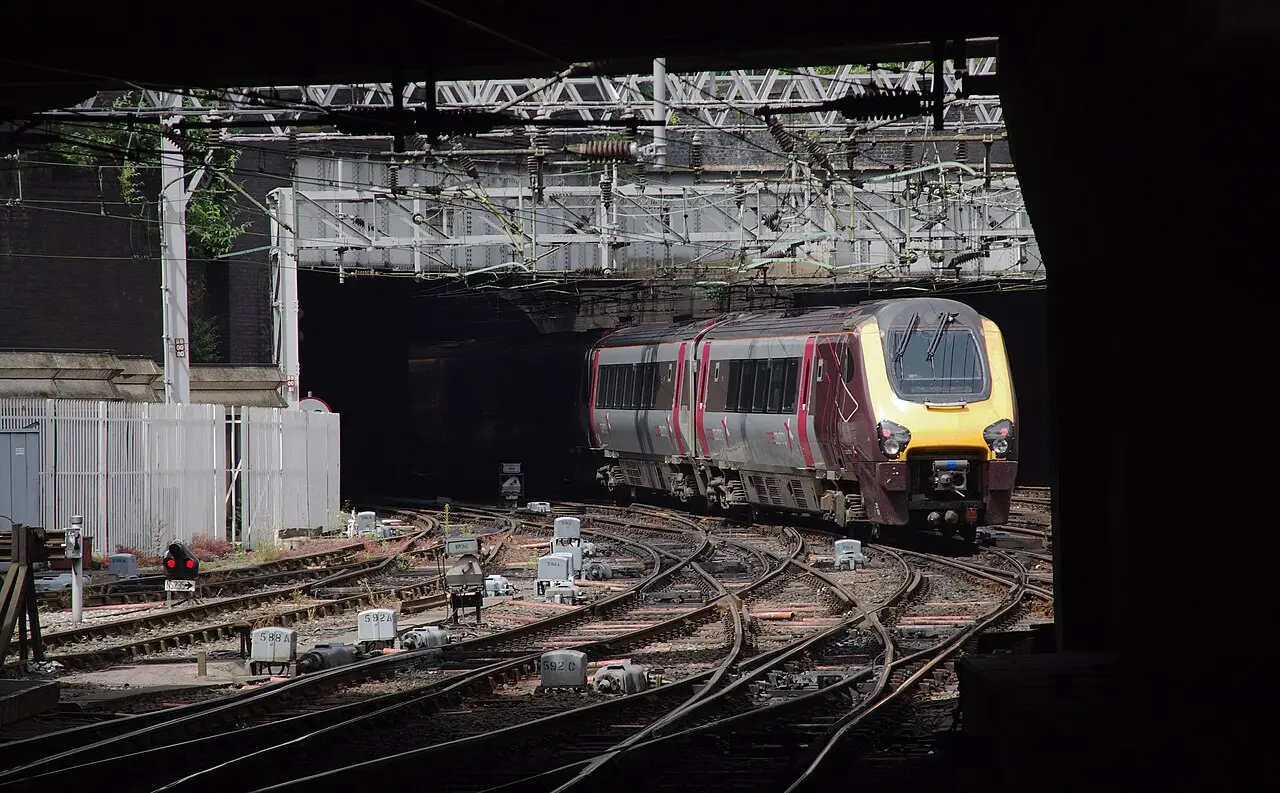
Designs for a rebuilt Birmingham New Street station have been shown to the public, in a project known as Gateway Plus that aims to transform one of the most criticised railway stations in the country.
The plans, unveiled in February, propose the complete rebuilding of the station's street-level buildings and the refurbishment of its platforms by 2013. The tracks and platforms themselves would stay essentially the same.
A station bursting at the seams
New Street has long been unpopular with the people who use it. The station was completely rebuilt in the 1960s as an enclosed station with buildings over most of its span, and it has struggled to cope ever since.
It was designed to handle 650 trains and 60,000 passengers a day, but now deals with far more, leading to overcrowding and to closures on safety grounds. Its 1960s concrete architecture has also been widely criticised. In November 2003, readers of Country Life magazine voted it the second biggest "eyesore" in the UK.
How the plans came about
Proposals to redevelop the station gained momentum in recent years as its problems grew. A feasibility study was approved in January 2005, paving the way for the designs now on show.
The scheme, which has been known by several names including Birmingham Gateway, Gateway Plus and New Street Gateway, would give the station new, brighter passenger areas at street level, making it easier and safer for passengers to move through.
A long history
The original New Street station opened in 1854. When it was built, it had the largest single-span arched roof in the world.
The station that replaced it in the 1960s sits beneath a cluster of buildings, including the nine-storey Ladywood House office block, a multi-storey car park and the 20-storey Stephenson Tower flats, built alongside the station in the mid-1960s.
What happens next
The designs are being shown to the public as the scheme moves towards a planning application, and funding for the work has still to be secured.
The ambition is to give Birmingham a station that matches its role as the busiest interchange on the national rail network outside the capital. For the thousands of commuters and visitors who pass through New Street every day, the proposals offer the prospect of a station that is lighter, less crowded and easier to use.
Writers on railway architecture have been scathing about the current station: Steven Parissien described it as a "depressing underground bunker", and Simon Jenkins called it "hideous".
More in Transport
All
Latest news
Featured posts
-
Things to do
Top 10 places to visit in Birmingham
-
Food and drink
The 12 most popular food spots in Birmingham
-
Things to do
The best laser tag locations in Birmingham